rewrite:
I
There is the assumption that Warhol is one of the cheif poets of mechincal reproduction, and everything that he does can be associated with isolating the artists hand---his first drawings were for books and magazines; his paintings were screen prints done by others; his films were like empire and couch, with no director and no plots or like screen shots which was dictated conceptually. When narrative plot and semi tradtional acting seemed to be called for, he got Paul Morrissey to take over his task. His novel and his diaries were dictated over the telephone to Pat Hackett, and the Interviews for Interview magaizne were audio taped in a similar way.
II
The standard narrative then ties every aspect of his personality to an almost autistic obsession with machines--and his using of those machines in a very specfic ways. He did not have to t alk to people, he did not need to be nervous about social interactions---in many ways then he was alaways the sickly kid in bed, tracing pictures out of motion picture magazines; his sexual awakening becoming the voyueristic pop culture events (Bob Cocacello talks of this in his nasty biography Holy Terror, with Warhol obsessivley stalking celevrties and reeling them in, taking their poloroids(sp) to mark his place outside of direct one-on-one contact.) The hard minimalist Donald Judd "imagine(d) Warhol's paintings without such subject matter, simply as 'overall' paintings of repeated elements".
III
You cannot deny Warhols work had a mechincal obsession, and he, with his constant talk of machines, with his stated desire to be an automan, with his denial of any formalist skill encouraged this reading. However the concentration of mechincal intercessors---of the magazines tha came from printing presses, the camera, the screen printers, the tape recorders--overshadows the deeply important techincal concerns of his work. The painterly application of line, the choices of subject matter, the draughtsmanship and sepcially the radiucal recentralizing of colour are deeply under represented, mostly I think because formalist readings in the last 100 years have become more and more difficult.
IV
There are peices that break open Warhol, that make a new reading nessceary, a different kind of textual concern come to the forefront. Warhol produced so much and so obsessively that when you get a frame someone uncovers another stash of work that unsettles it all. Bruce Hainley told Wayne Kaustenbaum in November 2002's Art Forum "BEcause of How much Andy Warhol produced, theres always more then can be remembered"). The reworking of Warhol's formalist self is starting slowly, and the works that are being used in this unsettling are seemingly marginal. These works include a series of preprtaory drawings in graphite and pastels done for the paint by number screen prints done in 1962.
V
These drawings are small, crude, ungraceful , smeared and almost juveinle. They lack the skill of his most famous works on paper--for example the Americanized Coceteau lightness of his Boy Book of 1956; the cheerfully commerical shoe advertisments of Bonwit Teller, the ever so slight edgy cats and lips or the lurid smearing of the screen prints. (The qaulity of the screen prints is really interesting, they show much more filedilty to their source mateiral then almost anything else--the smears, chopping, odd colours all have the cheap and available tabloid immedieacy, the lack of formal skill was a delibrate and sly choice, much wittier then the ben day dots of Lichenstien(sp). You can take the mistakes in form of the tabloid prints and compre them to the paint by number prep drawings , where things like colouring outside the lines seems to be because of lack of attention, care and maybe skill rather then any discussion of mechanic energy.
VI
The Paint By Number prints are pure Americana Schmaltz and at first view the assumption can be made that Warhol hired his assitants to blow up commerically avaible rural scenes--but this never happened in any of his other work. Warhol painted his own canvases, he chose the colours, the techinques and the purpose--some times he got help with subject matter, and sometimes he was aided in techincal concerns, but as for the major issues Warhol was queen bee. That said, the apperaence of these was an assitan painting the scenes until someone got lazy and bored or the theoritical work was complete.
VII
Warhol was thought to be easy, lazy, bored, shallow, vaccous. He was thought to be a flanuer who perged cabs to walking and limos to cabs. The prep drawings show his deep work effort, making traditional craft for post modern object. He took the long way around, making sure that the work was taken care of--photographs perfectly composed as back grounds for drawings as backgrounds for prints as backgrounds of paintings--the sheer volume of creative objects would indicate a pack rat with an office seceteary mentatlity and not some one who was lazy. As for shallow, this was something he wanted us to think---his famous qoute of "If you want to know all about Andy Warhol, just look at the surface of my paintings and films and me, and there I am, There is nothing behind it" can be disputed formally, with the drawings for prints--there is something very literally behind his work.
VIII
One of the best examples are a series of prints of Queen Elizabeth II for his living queens series, a minor and decortive series of prints, and with out much theortical baggage--unlike the Sickle and Hammer or Kinves and Guns series of the same time peroid. The QEII prints numbered 5, with each print having a different series of colouring, source material and drawings. These drawings date as early as 1978. So it took him 6 years of thinking, doing prep work and figuring out how to layer surfaces onto each other. The 1978 drawing is graphite on paper, half traced and half free drawn. It is a 3/4 portrait and is subtle, precise and well framed--the later prints have a chaotic, messy, and manic energy--his work as a colourist is the work of a chaotic child.
I also reminds me of watching the Antqiue Road Show on Feb. 2 @005 and seeing a perfect Warholian moment. I watched an appraised for a New York Auction house being unable to tell wether a small 1950s oil sketch of an elm and a red barn was Thomas Hart Benton or a paint by number--and the only way they could find out was turpentine--even x rays would not have worked)
VIII
The drawings for these prints recentralizes how important the actual act of object creation was for Warhol, how even though his harnd would fail at the preicse craft of machine colour and machine drawing, he attempted anyways; which may expalin the difficult painterly quirks that occur throughou this ouevere. Look at the Gold Marylin that is done at the same time as the paint by number drawings--it has been explained religously (as an orthodox Madonna) but there might be something to the teal eyeshadow, a love of that colour, a desire to fram the eyes in a way similar to de Kooning. This connection to dekooning can be seen as an almost fuck you, when you read Popism--his tour of the 60s art world, you find qoutes like" The world of the Abstract Expressionists was very macho. The painters who used to hang around the Cedar bar on University Place were all hard-driving, two fisted types who'd grab each other and say things like "I'll knock your fucking teeth out" and "I'll steal your girl." He again then makes a conceptual point using technique and colour--not words or language. (Another interesting formal note--he used the same shade in the early Liz Taylor paintings.) and the gold marylin was preceded by gold buttocks in the boy drawings--a formal choice that attached conceptual baggage (the desire for property and the desire for sex; conflated with the eye catching explicitness of shiny metallics).
IX
There are other examples, in his introductory catalog essay for the potraits of the 1970s and 1980s Robert Rosenblum noted the continuation of his obsession with painterly techinque as an engagement in a tension between subject (The cold, shallow, formal, historical and empty portrioats of minor celebrities, socialites, royalty, and random people with money. He notes that these are the subjects of any portriture from the beginning of European taste to the American arrvistes in Paris in late 19th and early 20th centuries, pointing out the infamous Madame X by Sargent, nameless but well created) and form (the wild brushstrokes, the strange blocks of colour, the weird off centeredness, the line peeking through, paint smearing across the edges like the shadow of neon on wet ashpalt.) The tension in these 80s portraits might be a microcosm of how Warhol politicises questions of aesthetics. You can also see this in the the work he did with Clemente, Basquiat and Haring near the end of his life. Thinking of the 1985 paintings, they are strange, with Warhol painting by stencil and tracing, giving his blankness for Basquit to paint over, to cancel, to reneg and to fall back onto--his paintings like Paramount (1984-1985) have an almost opedial struggle between the fake raw authenticity of Jean Michaels personae, and the fake cold slickeness of Warhols.
X
Going back to colour for a second, reading David Batchelor explains Warhol as formalist in his brilliant book Chromophobia, using the prep drawing of the paint by numbers as an illustration to a chaperter called Apocolypstick after the Serge Gainsbourgh song. (weird song, and really who was Gainsbourgh but Lou Reed with out the New York Scene, the decadent Nico and the boring CBGBs, its aan interesting question, thinking of Serge and Andy instead of Serge and Lou.) Batechlor calls into question the idea of Warhol as cold, as someone who did not care about formal concerns--of warhol as no more of a painter then the robots who paint cars in Detroit automobile plants. He moves Warhol into a painerly obsessiveness, a creamy, campy, colour fieldest. The chapter is about colour as a signifier of decadence--back to Marylin and Liz's eye shaodw, the gold buttocks, the painterly smears of tabloids and iranain princesses. Baetchlor tals abour Warhol bringing trash to life--but not the ordinary idea of film gossip and casual sex, not the conceptual trash warhol is forgiven for but a formalist, painterly trash. This is a low tash of mark making, colour and techinque, a trash of bright pinks, acid greens, lemon yellows, crimsons--and a trash of slurid smeared shapes, half traced lines and blackened corners.
XI
Warhol's use of colour, according to Baetchlor, is decorive, cosmeic, fun, strange, transgressive, and transformative. The decorotive comes because it does not seem to connect to any larger concern aside from being pretty, it does nto open up spaces, abut other colours in strange ways, recede or command. It is not the colours of abstract expressionists that came before him or the starkness of the minimalists who trained colour after him. It is the colour of cosmetics, literally (lipstick, eyeshadow, rouge, bronzer) and figurtivley (the colour that is there just to be there, the colour of candy, waxed fruit, silk flowers, the arch colour of the other) You can see the comsemtic best in early and late Warhol, in the lipsticks and shoes of the 50s and the Diamond Dust prints of the 80s. ; with this lack of seriousness comes the fun, the random joy that comes with the one perfect shade that cannot consider itself anywhere else. (the comic painings of the 60s, the toys that he did just before he went into the hospital for surgery, the blue tint in the Morissey films) .
XII
But only some of these paintings come with fake and joyful fun. There is transgression in formal choices as well . Look at how he coloured Mao, Nixon, the Death and Disaster Series, the Electric Chairs, Jackie, Race Riots and other overtly political work in the mid 60s and early 70s. Some of them were darkly ironic, like the pure white of the Two Ambulances in 1966 or the jesus blood crimson of Big Electric Chair of 1967 or the fact that Nixon (1972) and Mao 4 (1972) were roughly the same sickly green colour and the same year (I wonder if this was just because of a sale on the paint). But some of them made no sense, some of the electric chairs were lurid pinks and oranges. The Jackies were a handsome Yves Klein Blue and the colouring of the race riots was truly random--including the 1968 Mustard Yellow RAce Riot--which was a diptych, half being a race riot, with dogs and cops and victimized african americans and half being a mustard yellow field of pure colour--it is almost like there is a put on, a cryptic and complex renewal of the imporantace of things that were not considered important before that time.
XIII
The colour of the Race Riots may not be discussed at any length, but the obsessive repetetion is noted again and again--the post minimialist Donald Judd is qouted above, talking about the reptetion of Warhols work in general, but when critic Hal Foster writes of the Death and Disaster series in his essay "DEath in America, he talks of the repetion of the Race Riots in general, saying that having them repeated over and over again, it "serves to screen the real understood as traumatic. . . [Repetition] is a rupture not in the world but in the subject; or rather it is a rupture between perception and consciousness of a subject touched by an image." In this way, the formalist notions in Warhols work, and his obsession with technological intercessors problematizes politics. The rupture is not a conceptual one, but a formal one. The tension between the colour, the placement, the field, the subject matter and the title becomes impossible to solve.
XIII
To pay attention to colour is difficult, especially in work that is so open as Warhol--we are told not to pay attention to anything so frivolous, so when it becomes difficult, when it unstablizes pleasure, viewers become nervous. This does not only happen in Warhols work, but in art history from modernism on. It is one of the reasons why Clement Greenberg had to spend thousands of pages killing decoration whe trupted colour field--because he did not believe that colour could be used to signify anything either pleasurable or serious, anything that was not strictly formal. He called the work of those who split from the abexers novelty art in the mid 60s and was shocked in the 90s that it had managed to last 30 years. So it becomes strange that some one who was so good at noting the effects of colour and shape and line in a nebolus abstract way, lost it completley when a master used it to a much greater effect then people like de Kooning and Pollock, people Greenberg considered the greatest painters of 20th Century, but then maybe he was correct. Warhol was novel, he was obsessed with the new, the strange and the vital.
XIII
The thing about Greenberg is that he is needed when we talk about painting, he settled the formalist arguement in the mid century, defined the terms, and became the person to wrestle with. Up to this point we have talked about Warhol as a painterly formalist, as one who is opposed to Greenbergs modernism in how he used colour and line. But there is also Warhol as a photographer, and this is perhaps where is most transgressive and transformaitve. Warhol started taking pictures about the same time as it was getting a new critical voice. Though his movies were black and white, and the very early Stephen Shore photos of the factory were also black and white, things changed when Warhol came on the scene.
XIV
It took 100 years of the history of photography for a serious colourist to make it into the musuems. William Eaggleston was the first example--and it was because colour was so intergeral to Eagglestons work, it was impossible to deny his talent, and eaggleston took photos of the same kind of America that Andy did, the lost, the trashy, the broken, the pop --and in many ways, his photos were as formally trashy, though he shot with a leica, he often shot blind and he devolped his thousands of rolls at a local wal greens drug mart. The machine and the blankness were shared not only by Eggleston, but by a whole series of new creators. Stephen Shore was encouraged by Andy, who gave him his first break, and who later returned the favour by consulting on the book of fotos America, done by Warhol in the late 80s--he was also a series coulourist. The thing that these three had in common was nailed on the head by Baetchlor--, he qoutes Walker Evans, who saw these people as vulgar, and described "colour as someting that came up from the streets, discorandtly and inchorently" ...according to hin "colour photographers confuse colour with noise, they blow you down with screeching huse alone. a bebop of electric bluse, furious read and posion greens." Aside from the misplaced bebop this is a perfect description of Warhols paintings, but not of his fotos.
XV
Warhol was quiet in his poloroids, and his 35 mm. They were not art for arts sake, but photos to record and photos as preps for paintings and prints. They were lovingly composed and strange though. There were the stack for the sex part series, with elbows and knees and bellies taking as much precedent as cocks and asses, so that sex parts became tactile, futile skin. (JAsper Johns saw these little sqaures in the Factory when he was meant to look at larger paintings--he spent hours with the sex parts and minutes with the prints). There were also shots of people he knew, so that he could remember them (something that has become a popular quirk, rockstar Dave Navarro, film maker John Waters and hip new fotog Ryan McGinley among others have been known to do this.) There were still lives for later prints (including a heart breakingly composed foto of a bright blue sledge hammer and a bright red sickle on a white field, making a pervese socialist stars and stripes). Each of his prints was composed and shot with great care, they were not accidental, and the processing done by hand is not something expected of photographers anymore. That said the 35 mm prints were more candid, and more immediate, less composed and less careful--but they were also printed by hand, the paradox of mechanics is still very much in place.
XVII
I think sometimes about F Holland Day and Andy Warhol. F Holland Day started in the beginning part of the century, at first doing banal domestic and pastoral scenes, until he had a prophetic revsltoin and dressed himself as christ, crucified himself, and took photos both naked and suffering. Thinking of some of Andy Warhols late photography and these Day Suegertypes, i think there are more similaries then differences, there is the sexual ambiguity, he devolpment of personae, the conflation of personal idenity and religous obsession, the strange annonymity found in historical presentations. Then is the difference between a 19th century American Religous Mystic and a 20th century flanuer a question of technology ? How many formalist concerns are settled by the technology availbe at the time ?
XVIII
What you notice about the photographers then is useful in general. Warhol as colourist used the colour of the other. He used the immigrant colour on his ruthyn churchers in his gold pictures, in the hollywood icons. He was a formalist other, using decoration and cosmetics to disrupt the butch theatrics of greenbergian modernism. He was the social other, who painted and drew because he could not interact with people one on one, using formalist concerns to mitigate social awkardness. In many ways his colour meaning and theory and word though--i t became the comsemtics of mechincal reprodcuion, and it pushed forward a scandalized artifical aesthetics, or as Baetchlor qaoutes Barthes.."it is chemical in that it aggresivley refers o the artifice of chemisry, in is oppostion to nature. " He was unnatural because he was queer and urban, but also because nature posioned him as a child, and because nature was impossible to control in the same way that his work was. His work is a a chemical packaging of idelogical America--but it is eene more of a twist then that, because he uses the skills of tradtional arists to mock both artifice and realism--through a cosemtic blankness.
XIX
This would explain the radical clamation of paint by numbers flours, to use one earlier example. In the journey between pittsburgh and New York were hundreds of chemical companies, companies that made food dye, make up, paint for commerical and home applications, fake flavouring for food, perfumes, toys, plastics and oil. These companies provided a huge sieres of what warhol latter created in his paintings, they became a microcosm of the fake paradises, and the bitter destruction , the bright colours and sallow promises that marked the entirity of Warhols career. In the hour and half by train may be the key to the formalist puzzle we have been trying to eek out here.
XX
The question then--if Warhol reclaims commerical crassness as formalist masterpeice then doesnt that reduce the author to Andy as theorist instead of Andy as craftsmen--can we escape the conceptual orgy that is his work ? By having work that is hand coloured, smeared, befuddled, graceless, work that has been worked over and over again, is there a redemption of craft ? Is he an artist again, whose concerns are not about what painting is or the difference between commerical and fine art is or what chemical and comeic perfection can do to new artists ?
XXI
However perverse this seems, the work on the centent of Warhol the baggage of gender, sex(uality), status and class are seeing to be wrestled in a million grad sdchools (see the Freudian wank job that was Wayne Kaustenbaum's PEnguin Lives biography for a rather obsessive version of this) Warhol as formalist can refround discussion of the poliuical implications of colour, shape, line--how it can be cosmetic, decortive, serious and camp all in one. It is important to notice then, what is in front of us, notice the surface of texts, and how literally those surfaces top, bottom, abut and readjust each aother. Warhol as strictly formal painter and draftsmen tells us what we need to know about these things.
Friday, February 11, 2005

Thursday, February 10, 2005
alright
i have actually filled out paper slips for inter library loans, and looking for pop out, the jennifer doyle book on warhols gay sex gives me childrens books on bubbles, and i cannot find books on the english civil war in the entirity of strathcona system.
but i will rewrite the UCO peice for sojourners, aand am workign on the warhol as formalist essay and writing a toby keith/kenny chesney little one for anyone who wants it, maybe i will send it to mr eddy, and my health care is taken care of and i got a pitch accpeted by sunstone so thats good news.
im bored.
i have actually filled out paper slips for inter library loans, and looking for pop out, the jennifer doyle book on warhols gay sex gives me childrens books on bubbles, and i cannot find books on the english civil war in the entirity of strathcona system.
but i will rewrite the UCO peice for sojourners, aand am workign on the warhol as formalist essay and writing a toby keith/kenny chesney little one for anyone who wants it, maybe i will send it to mr eddy, and my health care is taken care of and i got a pitch accpeted by sunstone so thats good news.
im bored.
When Christians spoke of Jesus as JEwish they meant that they acknowledged his JEwish origins and the historical world out of which he emergerd. But when Jews stressed the Jewishness of JEsus they often meant that the whole story was simply an internecine squablle between competing Jewish factions--an intra-Jewish controversy that Christians had badly misread. In so doing , they were implicitly calling into question the foundations on which Christianiy rested. (24)
The church, for its oart,was not blind to the enormous value of the art form, for communicating the story of Jesus and for strenghtings the faith; but neither was it comfortable with the fact the Passion plays occupied some liminal space between the litrugical and the comerical--nor with the liklihood that commerical imperatives could easily override theological ones. And some in the church were deeply diturbedby the idea of an unordained man playing God(34)
One of the unspoken rules governing the search for the historical Jesus is that the search ends abruptly with the Crucifxion. Going any further than this is to introduce the Jewus of faith, a subject beyond the domain of historians. But the whole point of the Passion play, after all, to celebrate the Reseruction and the Ascention. The combination of pressure (to revise the Jesus of history) and silence (on the Jesus of faith)threatens to create a fissure bneween the two parts of the play. How far should the Jesus a history carry into the Jesus of faith on stage... (93)
...When the American Miltary Government surveyed attitudes towards Jews in 1946, 59 per cent Bavarians fell into the categories of racists, anti semites or intnese anti semites. An unpublishjed GErman public opinon poll taken a decade later showed that 39 per cent pf tje [p[ulation admitted to being defintiley anti semetic and another 29 per cent to be condionally anti semitic. Only 7 poer cent described themselves as philo semetic. Other findings were no less distrubing: the percentage of all germans who didnt want JEws livcing in the ir country was 37 per c ent in 1952 ( and had ony dropped to 19 per cent in 1965) As late as 191 , polls showed that one in secen GErmans did not want to live under the same roof or work alongside Jews...(148)
Of the 1934 passion play...leading performers, Jesus, played by Alois Lang, along with eight of his twelve apostles, were members of the Nazi party. So was the Virgin Mary, Anni Rutz. Ironically only Judas...is known to have been a strong Anti-Nazi. In fact, the high porpotion of Nazis in the main roles should not be surprising, since the selection was done under the supervision of HErmann Esser, a Hitler apointee. (149)
from the f ascianting and important history of James Shapiro's Obermmegau, the passion play which started in 1635, and has been happening every ten years since then...its a microcosm of the politics of typology, hermenutics, anti semitism, historical-social criticism, pyschogeography, etc etc. Well worth picking up. (this is the 19th)
Wednesday, February 09, 2005
http://nationalcatholicreporter.org/update/bn020805b.htm
the vatican does usual nonesense wrt to a jesuit theologian.
perfect news for ash wednesday, and another reason why im not going to church these days.
the vatican does usual nonesense wrt to a jesuit theologian.
perfect news for ash wednesday, and another reason why im not going to church these days.
Second Draft of Warhol
Warhol is one of the chief poets of mechanical reproduction andeverything he does can be associated with isolating the artistshand--his drawings at first, were for books and magazines; hispaintings were screen prints done by others; he abandoned this for filmthat required no direction and when direction was necessary Andy gotPaul Morrissey in on the action. His novels were dictated and so were heInterviews for Interview magazine--and threw out his life he traced,making his own images out of the dross of mechanical technique.He had an obsession with motion picture magazines from the beginning,these were intercessors of intercessors, and his obsession with all of these machines twined with a casual and effective draftsmanship was create because ofthis mechanical reproduction--of the magazines that came from printingpresses, of the camera (both still and film), of the vehicle and thetruck that brought them to the little queer kid in Philadelphia, hisstyle was created because of his desire for cybernetic union, and laterwas done for it.(ADD DISCUSSION OF POLOROIDS HERE)Which is why the preparatory drawings for the 1962 DIY paint by number screenprints are so seismic a change in how one views Warhol's work (that’sthe thing with Warhol, he produced so much and so obsessively thatwhen you get a frame someone uncovers another sash of work thatunsettles it all--or in the words of Bruce Hainley in an interviewwith Wayne Kostenbaum published by Art Forum in November2002--"Because of how much Andy Warhol Produced , there’s always morethen can be remembered.") (TIE TOGETHER BETTER T HE FIRST AND SECOND HALF)The paint by number drawings are small, crude ungraceful--they lack theAmericanized Cocteau lightness of his Boy Book from 1956, thecheerfully commercialism of shoes, the daisy fresh cats and lips, orthe lurid smearing of the screen prints done, where the "bad" quality(lack of technique and formal skill) were reflected by a fidelity ofsource (tabloids) (EXPLAIN MORE) and a respect for exactly what the machine could do (the thing about the screen prints, was that every smear was anindication of how the product was created, that it was not created byartists skill but by machines mistake). As opposed to these paint bynumber prep drawings, where the colouring outside of the lines seems tobe because of lack of skill rather then any mechanic energy.The prints that resulted from these drawings are pure Americana schmaltz and atfirst view the assumption can be made that he just blew up a commercially available rural scene, and had one of his many assistants paint the scenes untilthe assistant got lazy and bored or the theoretical work was completed. (AWKARD) (Because for Warhol being easy, lazy, bored, a flanuer who did not want to walk,was something to be expected and this laziness had theoreticalbaggage, was almost a punch line) (This reminds me of watching theantique road show on Feb. 2 2005 and seeing a perfect Warholian moment.I watched an appraiser for a new York auction house being unable totell whether a small 1950s oil sketch of a elm and red barn landscapewas a Thomas Hart Benton or a paint by number--and the only way thecould find out was turpentine--even x rays would not have worked).The drawings for these prints recentralizes how important the actually act of object creation was for Warhol, how even though his hand would fail at the precise craft of machine colour and machine drawing, he attempted anyways--which may explain any number of his difficult painterly quirks through out hisoeuvre (i.e. in the over the top teal eye shadow, and lurid oleo colouredhair of the Gold Marilyn done in the same year as the Paint by Numberdrawings I’m talking about here or the smeared canvases on some of theambulances or the 1970s and 1980s portraits with the Ab-Exdetailing---a detail that Robert Rosenblum talks about as acontinuation of his obsession with painterly technique and to engagein a tension between subject (cold, shallow, formal, historical,empty) and form (warm, complex, wild, almost amateurish) or the workhe did with Keith Haring and Jean Michael Basquiat near the end of hislife). (THIS IS CENTRAL TO YOUR THESIS, EXPAND)This drawing, aside from dealing with issues of form, craft and objectcan also explain this use of colour or at least this is how DavidBatchelor explains in his brilliant book Chromophobia, using the prepdrawing as an illustration to a chapter called Apocolypstick, afterthe Serge Gainsbourg song (TALK MORE ABOUT THE SONG), he calls into question the canonical cold formalism of Andy, moving him into a painterly obsessiveness, a creamy, campy, colour fieldest. The chapter is about colour as a signifier of decadence--quoting Baudlieare and Gainsboug among the other relevant French. He talks about Warhol who brings trash to life-not the literal trash of supposed low culture (tabloids and movies, not the literallow trash reclaimed by the theoretical content but a formalist t lowtrash, a low trash of mark making, colour, and technique.Warhol's use of colour, according to Baetchor, is decorative,cosmetic, fun, strange, transgressive and transformative (really, itis all colour that works this way it seems to me in reading this--thewhole book is about how in western culture colour is avoided assomething both silly and dangerous, the unstablizing of pleasure thatoccurs whenever what is assumed to be frivolous is foregrounded, itsjust that Warhol is one of the absolute best at it--its one of thereasons why Clement Greenberg (QUOTE) had to spend 1000s of pages killingdecoration when he trumpeted colour field---how he had to make all ofit a moral issue and how avant-garde and kitsch reads like a midmodernist Zwinligi---and how Warhol is really a libertine who topplesprotestant joylessness). It is the danger of our formalist selves--thatwhich is brightly coloured is that which can be dismissed ascarnivalesque (sp).In fotos (WHY FOTOS, EXPAND AND EXPLAIN) it took until William Eaggleston in the 1970s before a serious colourist made it into the museums--to use an example (and there is really not any photographer working whose colour is asintegral to meaning and theory as Eggleston--even the snapshotfotographers of the late 80s often sacrificed form to otherthings---Nan Goldin being the example that c comes to mind.) Batechlorpicks this up in Chromophobia, quoting Walker Evans about WilliamEaggleston; he says Walker Evans, the great monochromatic photographer, considered colour photography a 'vulgar' medium. He also thought of colour as something that came up from the streets, discordantly and incoherently:'colour> photographers confuse colour with noise,' they '[blow]> you down with screeching hues alone. a bebop of> electric blues, furious reds and poison greens.
So Warhol as colourist was the colour of the other (the immigrantother, the formal other, the social other, the other of Ruthianchurches, mobile stars, immigrant costume, colour that transcendedmeaning and theory and word--cosmetics of mechanicalreproduction--which became an assault to seriousness; its pretty andbecause its pretty, is worth pushing forward a decorative, scandalized and aesthetic...or as Baetchlor quotes Barthes "it ischemical in that it aggressively refers to the artifice of chemistry,in its opposition to nature ..."(61) ( CENTER) (which is why the paint by numberswere against nature, they were the mockery of authentic artistsbringing plain air eyes to specific scenes--it is then a chemicalpackaging of ideological America--but it is even more of a twist thenthat, because he uses the skills of traditional artists to mock bothartifice and realism--through a cosmetic blankness.)This would explain the radical reclamation of paint by numbers flowers,the insane colours, dictated by companies, that also made food dye andmake companies; companies between Warhol's past in Philly and Presentin New York (CLARIFY)--(by extension work that bridged the gap between makework projects instituted by his mother and done by the young AndrewWarhola and make work projects in the opposite direction.The question then--if Warhol reclaims commercial crassness asformalist masterpiece then doesn’t that reduce the author to Andy astheorist instead of the Andy as craftsmen which is talked about in this essay.
By having a hand coloured, smeared, befuddled, gracelesswork--a work that looks like its been worked over, there is aredemption of craft--He is an artist again, whose concerns are notabout what painting is or the difference between commercial andfine art is, or what chemical and cosmetic perfection can do to newartists (what does he development of technology's do to the Artist forexample--how do the sex parts Polaroid’s of Andy in the 70s differ fromF Holland Days daguerreotypes, the sexual ambiguity, the development ofpersonae, the conflation of personal identity and religious obsession,the strange anonymity--all of these are the same in these two works,and the unique object is invented in each process--what’s thedifference ?)Were any of this addressed, it doesn't matter as much as making sure that Warhol's reclaiming and negation of formal categories is addressed—or, Blatechor again, "A perverse rehearsal of the academic habit ofcomposition--contour-chichousco-colour" (61). (TALK MORE ABOUT THIS) However perverse this seems, the work on the content of Warhol, the baggage of gender, sex (uality), status and class are seeing to be wrestled in a milliongrad schools (see the Freudian wank job that was Wayne Kaustenbuam'sPenguin Lives biography for a rather obsessive vision of this)Using a unique object of handicraft reground discussion of thepolitical implication of color, shape line-decorating, cosmetic,serous and camp in all in one, is an ingenious and new way ofintroducing new exculpatory evidence. By extension--maybe we can notehow lovely the gold of Marilyn is, or how strange and hygienic thetwo white ambulance (1963) are or how ineffective the green of theIranian princess (1981) is in relation to the death pallor of Nixon(1972)--or even what it means when Nixon and Mao are the same colour.Form as political replication, something needed to look at, as criticsas well as viewers. (STRONGER AND LONGER)
Warhol is one of the chief poets of mechanical reproduction andeverything he does can be associated with isolating the artistshand--his drawings at first, were for books and magazines; hispaintings were screen prints done by others; he abandoned this for filmthat required no direction and when direction was necessary Andy gotPaul Morrissey in on the action. His novels were dictated and so were heInterviews for Interview magazine--and threw out his life he traced,making his own images out of the dross of mechanical technique.He had an obsession with motion picture magazines from the beginning,these were intercessors of intercessors, and his obsession with all of these machines twined with a casual and effective draftsmanship was create because ofthis mechanical reproduction--of the magazines that came from printingpresses, of the camera (both still and film), of the vehicle and thetruck that brought them to the little queer kid in Philadelphia, hisstyle was created because of his desire for cybernetic union, and laterwas done for it.(ADD DISCUSSION OF POLOROIDS HERE)Which is why the preparatory drawings for the 1962 DIY paint by number screenprints are so seismic a change in how one views Warhol's work (that’sthe thing with Warhol, he produced so much and so obsessively thatwhen you get a frame someone uncovers another sash of work thatunsettles it all--or in the words of Bruce Hainley in an interviewwith Wayne Kostenbaum published by Art Forum in November2002--"Because of how much Andy Warhol Produced , there’s always morethen can be remembered.") (TIE TOGETHER BETTER T HE FIRST AND SECOND HALF)The paint by number drawings are small, crude ungraceful--they lack theAmericanized Cocteau lightness of his Boy Book from 1956, thecheerfully commercialism of shoes, the daisy fresh cats and lips, orthe lurid smearing of the screen prints done, where the "bad" quality(lack of technique and formal skill) were reflected by a fidelity ofsource (tabloids) (EXPLAIN MORE) and a respect for exactly what the machine could do (the thing about the screen prints, was that every smear was anindication of how the product was created, that it was not created byartists skill but by machines mistake). As opposed to these paint bynumber prep drawings, where the colouring outside of the lines seems tobe because of lack of skill rather then any mechanic energy.The prints that resulted from these drawings are pure Americana schmaltz and atfirst view the assumption can be made that he just blew up a commercially available rural scene, and had one of his many assistants paint the scenes untilthe assistant got lazy and bored or the theoretical work was completed. (AWKARD) (Because for Warhol being easy, lazy, bored, a flanuer who did not want to walk,was something to be expected and this laziness had theoreticalbaggage, was almost a punch line) (This reminds me of watching theantique road show on Feb. 2 2005 and seeing a perfect Warholian moment.I watched an appraiser for a new York auction house being unable totell whether a small 1950s oil sketch of a elm and red barn landscapewas a Thomas Hart Benton or a paint by number--and the only way thecould find out was turpentine--even x rays would not have worked).The drawings for these prints recentralizes how important the actually act of object creation was for Warhol, how even though his hand would fail at the precise craft of machine colour and machine drawing, he attempted anyways--which may explain any number of his difficult painterly quirks through out hisoeuvre (i.e. in the over the top teal eye shadow, and lurid oleo colouredhair of the Gold Marilyn done in the same year as the Paint by Numberdrawings I’m talking about here or the smeared canvases on some of theambulances or the 1970s and 1980s portraits with the Ab-Exdetailing---a detail that Robert Rosenblum talks about as acontinuation of his obsession with painterly technique and to engagein a tension between subject (cold, shallow, formal, historical,empty) and form (warm, complex, wild, almost amateurish) or the workhe did with Keith Haring and Jean Michael Basquiat near the end of hislife). (THIS IS CENTRAL TO YOUR THESIS, EXPAND)This drawing, aside from dealing with issues of form, craft and objectcan also explain this use of colour or at least this is how DavidBatchelor explains in his brilliant book Chromophobia, using the prepdrawing as an illustration to a chapter called Apocolypstick, afterthe Serge Gainsbourg song (TALK MORE ABOUT THE SONG), he calls into question the canonical cold formalism of Andy, moving him into a painterly obsessiveness, a creamy, campy, colour fieldest. The chapter is about colour as a signifier of decadence--quoting Baudlieare and Gainsboug among the other relevant French. He talks about Warhol who brings trash to life-not the literal trash of supposed low culture (tabloids and movies, not the literallow trash reclaimed by the theoretical content but a formalist t lowtrash, a low trash of mark making, colour, and technique.Warhol's use of colour, according to Baetchor, is decorative,cosmetic, fun, strange, transgressive and transformative (really, itis all colour that works this way it seems to me in reading this--thewhole book is about how in western culture colour is avoided assomething both silly and dangerous, the unstablizing of pleasure thatoccurs whenever what is assumed to be frivolous is foregrounded, itsjust that Warhol is one of the absolute best at it--its one of thereasons why Clement Greenberg (QUOTE) had to spend 1000s of pages killingdecoration when he trumpeted colour field---how he had to make all ofit a moral issue and how avant-garde and kitsch reads like a midmodernist Zwinligi---and how Warhol is really a libertine who topplesprotestant joylessness). It is the danger of our formalist selves--thatwhich is brightly coloured is that which can be dismissed ascarnivalesque (sp).In fotos (WHY FOTOS, EXPAND AND EXPLAIN) it took until William Eaggleston in the 1970s before a serious colourist made it into the museums--to use an example (and there is really not any photographer working whose colour is asintegral to meaning and theory as Eggleston--even the snapshotfotographers of the late 80s often sacrificed form to otherthings---Nan Goldin being the example that c comes to mind.) Batechlorpicks this up in Chromophobia, quoting Walker Evans about WilliamEaggleston; he says Walker Evans, the great monochromatic photographer, considered colour photography a 'vulgar' medium. He also thought of colour as something that came up from the streets, discordantly and incoherently:'colour> photographers confuse colour with noise,' they '[blow]> you down with screeching hues alone. a bebop of> electric blues, furious reds and poison greens.
So Warhol as colourist was the colour of the other (the immigrantother, the formal other, the social other, the other of Ruthianchurches, mobile stars, immigrant costume, colour that transcendedmeaning and theory and word--cosmetics of mechanicalreproduction--which became an assault to seriousness; its pretty andbecause its pretty, is worth pushing forward a decorative, scandalized and aesthetic...or as Baetchlor quotes Barthes "it ischemical in that it aggressively refers to the artifice of chemistry,in its opposition to nature ..."(61) ( CENTER) (which is why the paint by numberswere against nature, they were the mockery of authentic artistsbringing plain air eyes to specific scenes--it is then a chemicalpackaging of ideological America--but it is even more of a twist thenthat, because he uses the skills of traditional artists to mock bothartifice and realism--through a cosmetic blankness.)This would explain the radical reclamation of paint by numbers flowers,the insane colours, dictated by companies, that also made food dye andmake companies; companies between Warhol's past in Philly and Presentin New York (CLARIFY)--(by extension work that bridged the gap between makework projects instituted by his mother and done by the young AndrewWarhola and make work projects in the opposite direction.The question then--if Warhol reclaims commercial crassness asformalist masterpiece then doesn’t that reduce the author to Andy astheorist instead of the Andy as craftsmen which is talked about in this essay.
By having a hand coloured, smeared, befuddled, gracelesswork--a work that looks like its been worked over, there is aredemption of craft--He is an artist again, whose concerns are notabout what painting is or the difference between commercial andfine art is, or what chemical and cosmetic perfection can do to newartists (what does he development of technology's do to the Artist forexample--how do the sex parts Polaroid’s of Andy in the 70s differ fromF Holland Days daguerreotypes, the sexual ambiguity, the development ofpersonae, the conflation of personal identity and religious obsession,the strange anonymity--all of these are the same in these two works,and the unique object is invented in each process--what’s thedifference ?)Were any of this addressed, it doesn't matter as much as making sure that Warhol's reclaiming and negation of formal categories is addressed—or, Blatechor again, "A perverse rehearsal of the academic habit ofcomposition--contour-chichousco-colour" (61). (TALK MORE ABOUT THIS) However perverse this seems, the work on the content of Warhol, the baggage of gender, sex (uality), status and class are seeing to be wrestled in a milliongrad schools (see the Freudian wank job that was Wayne Kaustenbuam'sPenguin Lives biography for a rather obsessive vision of this)Using a unique object of handicraft reground discussion of thepolitical implication of color, shape line-decorating, cosmetic,serous and camp in all in one, is an ingenious and new way ofintroducing new exculpatory evidence. By extension--maybe we can notehow lovely the gold of Marilyn is, or how strange and hygienic thetwo white ambulance (1963) are or how ineffective the green of theIranian princess (1981) is in relation to the death pallor of Nixon(1972)--or even what it means when Nixon and Mao are the same colour.Form as political replication, something needed to look at, as criticsas well as viewers. (STRONGER AND LONGER)
Monday, February 07, 2005
Sunday, February 06, 2005
87 per cent of Us counties and 86 out of 276 american metropolitian areas have no access to abortion, which makes it defacto illegal.
http://bitchphd.blogspot.com/
http://bitchphd.blogspot.com/
"Walker Evans, the great monochromatic photographer, considered colour photography a 'vulgar' medium. He also thought of colour as somethign that came up from the streets, discordantly and incoherently:...'colour> photographers confuse colour with noise,' they '[blow]> you down with screeching hues alone.. a bebop of> electric blues, furious reds and poison greens.'" -> David Batchelor, "Chromophobia", quoting Sally> Eauclaire, "The New Colour Photography" (New York, 1981)
for the essay below.
for the essay below.
Saturday, February 05, 2005
havent been reading books, with the move and the being really sick and the depression (fuck was moving back to alberta a mistake, i dont even want to think about how trapped i feel right now and how little i am connected her emotionally, etc.) anyways back to books...two more
cad by rick morin, which should have been a vapid fuck me tour of a writers upper east side conquests, and ends up being pathetic and tragic---not funny at all, although it is sold that way.
and i dont remember the authour or the title, but the cinderella equvilent of Wicked, which is awful and ridiculously bad and laughable, and not worth anything.
cad by rick morin, which should have been a vapid fuck me tour of a writers upper east side conquests, and ends up being pathetic and tragic---not funny at all, although it is sold that way.
and i dont remember the authour or the title, but the cinderella equvilent of Wicked, which is awful and ridiculously bad and laughable, and not worth anything.
Wednesday, February 02, 2005
first draft for freaky trigger
warhol is one of the cheif poets of mechincal reproducion and everything he does an be associated with isolating the artists had--his deawings at fierst, were for books and magazines;his paintings were screen prints done by others;he abondened this for film that required no direcion and when direction was nessceary andy go paul morissey in on the action. His novels were dicated and so were he Interviews for Interview magazine--and thru out his life he traced, making his own images out of the dross of mechincal techinque.
he had an obsession with motion picture magazines from the beginning, intercessors of intercessors, and his obsession with these machines twined with a casual and effective draftsmanship was create because of this mechincal reproduction--of the magazines that came from printing presses, of the camera (both still and film), of the vehicle and the truck that borught them to the little queer kid in philadeplhia, his style was creaed because of his desire for cyberntic union, and later was done for it.
which is why the prep drawings for the 1962 DIY paint by number screen prints are so seismic a change in how one views Warhols work (thats the thing with Warhol, he produced so much and so obsessively that when you get a frame someone uncovers another sash of work that unsettles it all--or in the words of Bruce Hainley in an interview with Wayne Kostenbaum published by Art Forum in Novemember 2002--"Because of how much Andy Warhol Produced , theres always more then can be remembered.")
the prep drawings are small, crude ungraceful--they lack the americanized cocteau lightness of his boy book from 1956, the cheerfull commericalism of shoes, the daisy fresh cats and lips, or the lurid smearing of the sceen prints done, where the "bad" qauilty (lack of technique and formal skill) were reflected by a feidilty of source (tabloids) and a respect for exactly what the machine could do (the thing about the screen prints, was that every smear was an indication of how the product was created, that it was not created by artists skill bu by machines mistake). As opposed to these paint by number prep drawings, where the colouring ouisde of the lines seems to be because of lack of skill rather then any mechanic energy.
the larger paint by numbers prints are pure americana schmaltz and at first view its assumed that he just blew up a commerically availbe rural scene, and one of his assitants paint the scenes half way until the assitant got lazy and bored or the theoritcal work was completed. (because being easy, lazy, bored, a flanuer who did not want to walk, was something to be expected and this laziness had theoritical baggage, almost a punch line) ( this reminds me of watching the antique roadshow on Feb. 2 2005 and seeing a perfect warholian moment. i watched an appraiser for a new york auction house being unable to tell whether a small 1950s oil sketch of a elm and red barn landscape was a Thomas Hart Benton or a paint by number--and the only way the could find out was turpentine--even x rays would not have worked).
Which really recentralizes how much the act of object creation was for Warhol, how even though his hand would fail at the precise craft of mahine colour and machine drawing, he attempted anyways--which may expalin any number of his difficult painterly quirks through out his oeurve (ie in the over the top teal eyeshadow, and lurid oleo coloured hair of the Gold Marylin done in the same year as the Paint by Number drawings im talking about here or the smeared canvases on some of the ambulances or the 1970s and 1980s portaits with the ab ex detailing---a detail that Robert Rosenblum talks about as a continuation of his obsession with painterly techinque and to engage in a tension between subject (cold, shallow, formal, historical, empty) and form (warm, complex, wild, almost amauterish) or the work he did with keith harring and jean michael basquit near the end of his life).
This drawing, aside from dealing with issues of form, craft and object can also explain the use of colour or at least this is how David Batchelor explains in his brilliant book Chromophobia, using the prpe drawing as an illustration to a chapter called Apocolypstick, after the Serge Gainsbourgh, he calls into question the cannonical cold formalism of Andy, moving him ino a painterly obsessivness, a creamy, campy, colouyr fieldest. The chapter is about colour as a signifier of decadence--qouting Baudlieare and Gainsboug among the other realvenet French. He talks about Warhol who brings trash tolife-not the literal trash of supposed low culture (tabloids and moviews, not the literal low trash reclaimed by the theoritcal conbtent but a formalis t low trash, a low trash of mark making, colour, and techinque.
Warhol's use of colour , according to Baetchor, is decorative, cosemitc, fun, strange, transgressive and transformative (really, it is all colour that works this way it seems to me in reading this--the whole book is about how in western culture colour is avoided as something both silly and dangerous, the unstablizing of pleasure that occurs whenever what is assumed to be frivilous is foregrounded, its just that Warhol is one of the absoulte best at it--its one of the reasons why Clement Greenberg had to spend 1000s of pages killing decoration when he trumpted colour field---how he had to make all of it a moral issue and how avant garde and kitsch reads like a mid modernist Zwinligi---and how Warhol is really a libertine who topples protestant joylessness). It is the danger of our formalis selves--that which is brightly coloured is that which can be dismissed as carnivalisque.
In fotos it took until William Eaggleston in the 1970s befoie a seriouus colourist made it into the musu8ems--to use an example (and there is really not any photographer working whos colour is as intergral ot meaning and theory as eagleston--even the snapshot fotographers of the late 80s often sacrificed form to other things---Nan Goldin being the example that c omes to mind. Batechlor picks this up in Chromophobia, qouting Walker Evans about William Eaggleston, he says "INSERT QUOTE HERE"
So Warhol as colourist was the colour of the other (the immigrant other, the foirmal other, the social other, the other of Ruthian churches, mobie stars, immigrant costume, colour that transcended meaning and theory and word--cosmetics of mechincal redproduction--which became an assult to seriousness; its pretty and because its pretty, is worth pushing forward a decorative , scadalaised and aesthetic...or as Baetchlor qaoutes Barthes "it is chemaical in that it agressively refers to the artifice of chemistry, in its oppostion to nature ..."(61)(which is why the paint by numbers where against nature, they were the mockery of authentic artiss bringing plein air eyes to specefic scenes--it is then a chemical pacakaging of ideological america--but it is even more of a twist then that, becuse he uses the skills of traditonal artists to mock both artifice and realism--through a cosmetic blankness.)
This would explain the radical reclamtion of paint by numbers flowers, the insnae colours, dictate by companies, that also made foof fyue and make companies; compaines between warhols past in Philly and Present in New York--(by extenstion work that bridged the gap between make work projectys instituted by his mother and done by the young Andrew Warhola and make work projects in the opposite direction.
The question then--if Warhol reclaims commerical crassness as formalist mastepeice then isnt the point to reduce the authou--Andy as theoriust. By having a hand coloured, smaredm befuddled, graceless work, a work that looks like its been worked over, there is a redemption of craft--He is an artist again, whose concerns are not about what is painting or what the difference between commerical and fine art is, or what chemical and cosmetic perfection can do to new artsits (what does he deveolpment of techonolgy do to the Artist for example--how do the sex parts poloroids of andy in the 70s differ from F Holland DAys daugertypes, the sexual ambiguity, the devolpment of personae, the conflation of personal idenitiy and religous obsession, the strange annonymity--all of these are the same in these two works, and the unique object is invented in each process--whats the difference ?)
Were any of this addresed, it doesnt mtter as much as making sure that Warhols reclaiming and negation of formal categoties is addressed--or, Blatechor agaoin, "A perverse reherasl of the academic habit of composition--contour-chichousco-colour" (61). However perverse this s eems, the work on the content of Warhol, the baggage of gender, sex(uality), statusm and class aare seeing to be wrestled in a million grad schools (see the freudian wank job that was Wayne Kaustenbuams Penguin Lives biography for a rather obsessive vision of this)
Using a unique object of hadicraft reground discusssion of the political implication of coloour, shape lione-decoratioing, cosmetic, serous and camp in all in one, is an ingenious and enw way of introducing new exculpory evidence. By exenstion--maybe we can note how lovely tyhe gold of maryline is, or how strange and hygenic the two white albumance (1963) are or how ineffective the green of the Iranian princess (1981) is in realtion to the death plalor of Nixon (1972)--or even what it means when Nixon and Mao are the smae colour. Form as poliical replication, someting needed to look at, as crtiics as well as viewers.
warhol is one of the cheif poets of mechincal reproducion and everything he does an be associated with isolating the artists had--his deawings at fierst, were for books and magazines;his paintings were screen prints done by others;he abondened this for film that required no direcion and when direction was nessceary andy go paul morissey in on the action. His novels were dicated and so were he Interviews for Interview magazine--and thru out his life he traced, making his own images out of the dross of mechincal techinque.
he had an obsession with motion picture magazines from the beginning, intercessors of intercessors, and his obsession with these machines twined with a casual and effective draftsmanship was create because of this mechincal reproduction--of the magazines that came from printing presses, of the camera (both still and film), of the vehicle and the truck that borught them to the little queer kid in philadeplhia, his style was creaed because of his desire for cyberntic union, and later was done for it.
which is why the prep drawings for the 1962 DIY paint by number screen prints are so seismic a change in how one views Warhols work (thats the thing with Warhol, he produced so much and so obsessively that when you get a frame someone uncovers another sash of work that unsettles it all--or in the words of Bruce Hainley in an interview with Wayne Kostenbaum published by Art Forum in Novemember 2002--"Because of how much Andy Warhol Produced , theres always more then can be remembered.")
the prep drawings are small, crude ungraceful--they lack the americanized cocteau lightness of his boy book from 1956, the cheerfull commericalism of shoes, the daisy fresh cats and lips, or the lurid smearing of the sceen prints done, where the "bad" qauilty (lack of technique and formal skill) were reflected by a feidilty of source (tabloids) and a respect for exactly what the machine could do (the thing about the screen prints, was that every smear was an indication of how the product was created, that it was not created by artists skill bu by machines mistake). As opposed to these paint by number prep drawings, where the colouring ouisde of the lines seems to be because of lack of skill rather then any mechanic energy.
the larger paint by numbers prints are pure americana schmaltz and at first view its assumed that he just blew up a commerically availbe rural scene, and one of his assitants paint the scenes half way until the assitant got lazy and bored or the theoritcal work was completed. (because being easy, lazy, bored, a flanuer who did not want to walk, was something to be expected and this laziness had theoritical baggage, almost a punch line) ( this reminds me of watching the antique roadshow on Feb. 2 2005 and seeing a perfect warholian moment. i watched an appraiser for a new york auction house being unable to tell whether a small 1950s oil sketch of a elm and red barn landscape was a Thomas Hart Benton or a paint by number--and the only way the could find out was turpentine--even x rays would not have worked).
Which really recentralizes how much the act of object creation was for Warhol, how even though his hand would fail at the precise craft of mahine colour and machine drawing, he attempted anyways--which may expalin any number of his difficult painterly quirks through out his oeurve (ie in the over the top teal eyeshadow, and lurid oleo coloured hair of the Gold Marylin done in the same year as the Paint by Number drawings im talking about here or the smeared canvases on some of the ambulances or the 1970s and 1980s portaits with the ab ex detailing---a detail that Robert Rosenblum talks about as a continuation of his obsession with painterly techinque and to engage in a tension between subject (cold, shallow, formal, historical, empty) and form (warm, complex, wild, almost amauterish) or the work he did with keith harring and jean michael basquit near the end of his life).
This drawing, aside from dealing with issues of form, craft and object can also explain the use of colour or at least this is how David Batchelor explains in his brilliant book Chromophobia, using the prpe drawing as an illustration to a chapter called Apocolypstick, after the Serge Gainsbourgh, he calls into question the cannonical cold formalism of Andy, moving him ino a painterly obsessivness, a creamy, campy, colouyr fieldest. The chapter is about colour as a signifier of decadence--qouting Baudlieare and Gainsboug among the other realvenet French. He talks about Warhol who brings trash tolife-not the literal trash of supposed low culture (tabloids and moviews, not the literal low trash reclaimed by the theoritcal conbtent but a formalis t low trash, a low trash of mark making, colour, and techinque.
Warhol's use of colour , according to Baetchor, is decorative, cosemitc, fun, strange, transgressive and transformative (really, it is all colour that works this way it seems to me in reading this--the whole book is about how in western culture colour is avoided as something both silly and dangerous, the unstablizing of pleasure that occurs whenever what is assumed to be frivilous is foregrounded, its just that Warhol is one of the absoulte best at it--its one of the reasons why Clement Greenberg had to spend 1000s of pages killing decoration when he trumpted colour field---how he had to make all of it a moral issue and how avant garde and kitsch reads like a mid modernist Zwinligi---and how Warhol is really a libertine who topples protestant joylessness). It is the danger of our formalis selves--that which is brightly coloured is that which can be dismissed as carnivalisque.
In fotos it took until William Eaggleston in the 1970s befoie a seriouus colourist made it into the musu8ems--to use an example (and there is really not any photographer working whos colour is as intergral ot meaning and theory as eagleston--even the snapshot fotographers of the late 80s often sacrificed form to other things---Nan Goldin being the example that c omes to mind. Batechlor picks this up in Chromophobia, qouting Walker Evans about William Eaggleston, he says "INSERT QUOTE HERE"
So Warhol as colourist was the colour of the other (the immigrant other, the foirmal other, the social other, the other of Ruthian churches, mobie stars, immigrant costume, colour that transcended meaning and theory and word--cosmetics of mechincal redproduction--which became an assult to seriousness; its pretty and because its pretty, is worth pushing forward a decorative , scadalaised and aesthetic...or as Baetchlor qaoutes Barthes "it is chemaical in that it agressively refers to the artifice of chemistry, in its oppostion to nature ..."(61)(which is why the paint by numbers where against nature, they were the mockery of authentic artiss bringing plein air eyes to specefic scenes--it is then a chemical pacakaging of ideological america--but it is even more of a twist then that, becuse he uses the skills of traditonal artists to mock both artifice and realism--through a cosmetic blankness.)
This would explain the radical reclamtion of paint by numbers flowers, the insnae colours, dictate by companies, that also made foof fyue and make companies; compaines between warhols past in Philly and Present in New York--(by extenstion work that bridged the gap between make work projectys instituted by his mother and done by the young Andrew Warhola and make work projects in the opposite direction.
The question then--if Warhol reclaims commerical crassness as formalist mastepeice then isnt the point to reduce the authou--Andy as theoriust. By having a hand coloured, smaredm befuddled, graceless work, a work that looks like its been worked over, there is a redemption of craft--He is an artist again, whose concerns are not about what is painting or what the difference between commerical and fine art is, or what chemical and cosmetic perfection can do to new artsits (what does he deveolpment of techonolgy do to the Artist for example--how do the sex parts poloroids of andy in the 70s differ from F Holland DAys daugertypes, the sexual ambiguity, the devolpment of personae, the conflation of personal idenitiy and religous obsession, the strange annonymity--all of these are the same in these two works, and the unique object is invented in each process--whats the difference ?)
Were any of this addresed, it doesnt mtter as much as making sure that Warhols reclaiming and negation of formal categoties is addressed--or, Blatechor agaoin, "A perverse reherasl of the academic habit of composition--contour-chichousco-colour" (61). However perverse this s eems, the work on the content of Warhol, the baggage of gender, sex(uality), statusm and class aare seeing to be wrestled in a million grad schools (see the freudian wank job that was Wayne Kaustenbuams Penguin Lives biography for a rather obsessive vision of this)
Using a unique object of hadicraft reground discusssion of the political implication of coloour, shape lione-decoratioing, cosmetic, serous and camp in all in one, is an ingenious and enw way of introducing new exculpory evidence. By exenstion--maybe we can note how lovely tyhe gold of maryline is, or how strange and hygenic the two white albumance (1963) are or how ineffective the green of the Iranian princess (1981) is in realtion to the death plalor of Nixon (1972)--or even what it means when Nixon and Mao are the smae colour. Form as poliical replication, someting needed to look at, as crtiics as well as viewers.
Saturday, January 29, 2005
Thursday, January 27, 2005
http://www.poems.com/essaorr.htm
david orr talks in the new poetry about the diction of disgust and the syntax of offense, a structual argument in how we determine our feelings irt people like pound, larkin and sexton--and also why larkin is a much better poet, a much more likable poet then people give him credit for...
alot of it is old hat (what more can be said about larkins racism, his misogyny, his banal taste for lesbian school girls) but by concentrating on effect of acual langauge on audience, it might be worth something.
also sexton apparently sexually abused her child, anyone know anything more about this?
david orr talks in the new poetry about the diction of disgust and the syntax of offense, a structual argument in how we determine our feelings irt people like pound, larkin and sexton--and also why larkin is a much better poet, a much more likable poet then people give him credit for...
alot of it is old hat (what more can be said about larkins racism, his misogyny, his banal taste for lesbian school girls) but by concentrating on effect of acual langauge on audience, it might be worth something.
also sexton apparently sexually abused her child, anyone know anything more about this?
http://www.timesonline.co.uk/article/0,,2-1458447,00.html
a reinvention of the 19th century ideal of masculine xianity hs seemed to be cropping up lately, the above book, and a difficult and riveting crisis of faith story in this months gq being the most recent examples. (the above link is worth reading, as the qoutes are rather juicy--an apologetics for violence, for one)
landlords are either a) crazy or b)pyschopaths or c)liars (when you say 250 mean 250, not 300 and not 320; dont bitch about the disabled when you are at the table w. me;show up to the appoinments you re supposed to go to...)
still homeless, stayed with d, then colleen and have no idea where i am tonite--some leads im chasing down high park looks the most promising.
a reinvention of the 19th century ideal of masculine xianity hs seemed to be cropping up lately, the above book, and a difficult and riveting crisis of faith story in this months gq being the most recent examples. (the above link is worth reading, as the qoutes are rather juicy--an apologetics for violence, for one)
landlords are either a) crazy or b)pyschopaths or c)liars (when you say 250 mean 250, not 300 and not 320; dont bitch about the disabled when you are at the table w. me;show up to the appoinments you re supposed to go to...)
still homeless, stayed with d, then colleen and have no idea where i am tonite--some leads im chasing down high park looks the most promising.
Wednesday, January 26, 2005
Now a warning! I am hesitant to even mention it, for it is not pleasant. It must be labeled as major transgression. But I will speak plainly. There are some circumstances in which young men may be tempted to handle one another, to have contact with one another physically in unusual ways. Latter-day Saint young men are not to do this.Sometimes this begins in a moment of idle foolishness, when boys are just playing around. But it is not foolishness. It is remarkably dangerous. Such practices, however tempting, are perversion. When a young man is finding his way into manhood, such experiences can misdirect his normal desires and pervert him not only physically but emotionally and spiritually as well.It was intended that we use this power only with our partner in marriage. I repeat, very plainly, physical mischief with another man is forbidden. It is forbidden by the Lord.There are some men who entice young meant to join them in these immoral acts. If you are ever approached to participate in anything like that, it is time to vigorously resist.While I was in a mission on one occasion, a missionary said he had something to confess. I was very worried because he just could not get himself to tell me what he had done.After patient encouragement he finally blurted out, “I hit my companion.”“Oh, is that all,” I said in great relief.“But I floored him,” he said.After learning a little more, my response was “Well, thanks. Somebody had to do it, and it wouldn’t be well for a General Authority to solve the problem that way”I am not recommending that course to you, but I am not omitting it. You must protect yourself.
boyd k packer
life is chaos, black dog back, more info maybe sooner.
boyd k packer
life is chaos, black dog back, more info maybe sooner.
Friday, January 21, 2005
also saw hell house last night, a doc on the houses created by evangelical xians in dallas to broadcast a v. narrow view of christianity, it included such wonders as 6 seconds to be saved; award cermonies for best rapist, a woman who took ru 486 and had her cunt bleed buckets of blood, a fag who died of aids, and went to hell b/c of his "homosexual lifestyle choices" and other such nonesense, but also managed to document the people behind this, talk about it as legitmate theater, talk about the catharsis and biographical sadness that makes this kind of thing nessc. ... a movie that went beyond mockery and into a surreal feeling for and because of the members, worth seeing.
alright
two more books
chromophobia, which i have read before, and which will result in a longish essay that will be typed when energy comes to me.
anne truitts memoirs, which made me realize that i care way too much about how other people live, but also which had some really poigant, well constructed, elegies towards a life not lived, adn also some joy in an age not constructed. (so 14&1/2)
ocap gave me all sorts of neat paper work, and housing listings and all sorts of other stuff so i have a chance to get ohip, have a house etc...halleujah (sidenote: i wonder if the real good work of ocap is the letters, the telephone calls, the networking, the guiding of people to resources, the talking to beurocrats, the small nonesenses, the virgil roles as opposed to the sqautting and the riots--or can you have one w/o the other--shock troops and agit props providing media coverage so the real work can be done (coverage as both a distraction and as a notice that there are things being done, and there is anger still to be had) (also what the fuck is it w. all the sympathy, all of the desire to return to a marxist/lennist/etc womb--how can anyone use the word bolshevism w/o irony--ocap seems to be w/o irony, with an explicit earnestness that i cannot seem to abide)
michael powell has resigned from the fcc and his replacement seems to hate free speech more, can someone explain to me why socons and neocons have not understood that a free marketplace of ideas will make it much easier to get there shit in the hearts and minds of other people---its a cowards gambit...but thats what we have come to expect
speaking of cowards gambit, the protests at this years innaguration seem much angrier, much more isolated, with 2 recorded instances of flag burning, and signs that say things like fuck bush and bush:a motherfucker--no poetry, no wit just a raw jet of unfettered exhausted wrath---great fotos here: http://centricle.com/photos/2005/01/21/and here: http://www.bradblog.com/archives/00001138.htm
(note the fotos of the riot policehttp://centricle.com/photos/2005/01/21/t how they humanize, how they make police seem complicated in a way the left usually fails , DC voted kerry on a margin of 10:1 and the police come from the regions surrounding--so many of these police would share the sentiments of the protestors, but because of a need to feed families etc, are required to police direct actions---so when do DA become another example of privelege ? notice in the fotos that most of the kids seem to be young and white (college educated?)
speaking of that, talked to dave yesterday, about history, about narrative, about privelege, about jesus and god and catholics and the muck of sorting that others do and i cannot seem to be bothered, it was good ot see him, his realpolitik and his almost unideological desire for "truth" is deeply refreshing.
speaking of privelge--otto dix needed to paint this man:http://gfx.dagbladet.no/pub/artikkel/4/42/420/420915/bushny2.jpg
two more books
chromophobia, which i have read before, and which will result in a longish essay that will be typed when energy comes to me.
anne truitts memoirs, which made me realize that i care way too much about how other people live, but also which had some really poigant, well constructed, elegies towards a life not lived, adn also some joy in an age not constructed. (so 14&1/2)
ocap gave me all sorts of neat paper work, and housing listings and all sorts of other stuff so i have a chance to get ohip, have a house etc...halleujah (sidenote: i wonder if the real good work of ocap is the letters, the telephone calls, the networking, the guiding of people to resources, the talking to beurocrats, the small nonesenses, the virgil roles as opposed to the sqautting and the riots--or can you have one w/o the other--shock troops and agit props providing media coverage so the real work can be done (coverage as both a distraction and as a notice that there are things being done, and there is anger still to be had) (also what the fuck is it w. all the sympathy, all of the desire to return to a marxist/lennist/etc womb--how can anyone use the word bolshevism w/o irony--ocap seems to be w/o irony, with an explicit earnestness that i cannot seem to abide)
michael powell has resigned from the fcc and his replacement seems to hate free speech more, can someone explain to me why socons and neocons have not understood that a free marketplace of ideas will make it much easier to get there shit in the hearts and minds of other people---its a cowards gambit...but thats what we have come to expect
speaking of cowards gambit, the protests at this years innaguration seem much angrier, much more isolated, with 2 recorded instances of flag burning, and signs that say things like fuck bush and bush:a motherfucker--no poetry, no wit just a raw jet of unfettered exhausted wrath---great fotos here: http://centricle.com/photos/2005/01/21/and here: http://www.bradblog.com/archives/00001138.htm
(note the fotos of the riot policehttp://centricle.com/photos/2005/01/21/t how they humanize, how they make police seem complicated in a way the left usually fails , DC voted kerry on a margin of 10:1 and the police come from the regions surrounding--so many of these police would share the sentiments of the protestors, but because of a need to feed families etc, are required to police direct actions---so when do DA become another example of privelege ? notice in the fotos that most of the kids seem to be young and white (college educated?)
speaking of that, talked to dave yesterday, about history, about narrative, about privelege, about jesus and god and catholics and the muck of sorting that others do and i cannot seem to be bothered, it was good ot see him, his realpolitik and his almost unideological desire for "truth" is deeply refreshing.
speaking of privelge--otto dix needed to paint this man:http://gfx.dagbladet.no/pub/artikkel/4/42/420/420915/bushny2.jpg
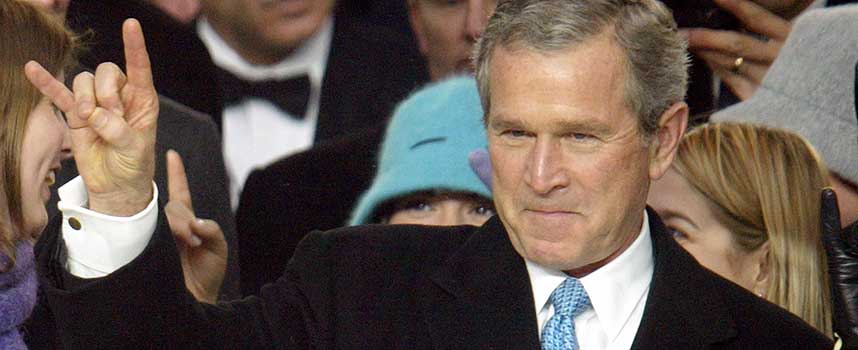
Wednesday, January 19, 2005
http://www.sfgate.com/cgi-bin/article.cgi?file=/c/a/2005/01/18/RICEBOXER.DTL&type=printable
barbara boxer vs condi rice...havent read it all yet.
drs appt put me on another list, made me wait, made me do the same standard neurlogists tests, which i am always b ad (and also include the classic drunk driving test, which always suprises me, and basically tells the world i am not meant to drive, basically i am unable to walk toe to heel in a straight line, i am unable to walk anywhere period in a straight line regardless.)
8 months to get telemetry...
barbara boxer vs condi rice...havent read it all yet.
drs appt put me on another list, made me wait, made me do the same standard neurlogists tests, which i am always b ad (and also include the classic drunk driving test, which always suprises me, and basically tells the world i am not meant to drive, basically i am unable to walk toe to heel in a straight line, i am unable to walk anywhere period in a straight line regardless.)
8 months to get telemetry...
Subscribe to:
Posts (Atom)