john roberts was confirmed today,
Bush: "(He) will be prudent in excercising judiical power, firm in defending judicial independence and above all a faithful gaurdian of the Constitution"
1) prudent means that he will not excercise any judicial power at all, because being an activist judge is bad (unless it is good)...prudent suggests moral restraint, suggests a calling against any thing that might flow free from the bench, the qauilty of mercy is strained, and will not drop from heaven at all...
2) why does he care about the seperation of powers now, he (or his cronies) have spent decades dismantling it...and why does the president appoint the supreme court anyways, is it not something that congress should do, do they not act as a check and balance on judical power?)
3) faithful gaurdian of the constituioun means treating it like a baptist treats the bible, or really how any conserative treats his scripture, infalliable and coming directly from god.
other stuff.
the photos shown are humanizing ones, cute, sweet young kid playing about the chair, kind of bored (cf kennedy/johnjohn and the oval office desk.)
jane roberts is a voluenteer for femminists for life.
from roberts himself:
"if the constituion says that the little guy should win, then the little huys going to win in the court before me, but if the constituion says that teh big guy should win, well then the big guy's going to win because my obligation is to the Constituion"
the constituion does not say anything, it is a dead text that requires interpertation, and it does not speak from beyond the grave...and it proves that he will be in the thomas. scalia, and that company.
i would also make the arguement that the democratic core of the constituion requires more taking care of the little guy then the big guy, but then im like that.
Friday, September 30, 2005

Thursday, September 29, 2005
12 Photographs from Fort Saskatchewan and 12 from Toronto. (A Show Submission, First Draft, Ft Sask Library)
My relationship with the Fort is elliptical. I have moved away from it and back to it, half a dozen times, not including biyearly vacations to Vancouver, Victoria and other west coast destinations since I was 15. Like most small town boys with ambitions, I feel conflicted about my hometown—I don’t like it mostly. I find it too small, too narrow and too prickly for me to stay. So I leave, I spend four months, or a year in Edmonton, 6 in Toronto, and I come back. Coming back, to this place, for me has the stench of failure. (Even in my adolescence, I took junior high and high school away from here.)
Can I admit that, in the beginning, trying to get a show here—at the library? (I have used this library for all of my life, I went to cub scouts as this library, play groups during the summer, for a year the LDS church met here, when I was still a member, and when I returned from Toronto, I returned here. Refuge and safety, the library in the small town works as churches in a medieval village—a neutral place away from power, attempting to further education and social goals. It is a place we call sanctuary. It is the closest to home.
It is also downtown, and a place that I found beautiful. I thought that I had escaped when I came to Toronto, a city of millions, and I thought of all the buildings I saw, from Robertson Romanesque, to classic modernist sky scrapers, to bricouler postmodernism, and why I loved the small, vernacular intimacies of the library, the post office, the Brant hotel, the Fort Hotel, the houses in the old part of town, near Ross and Lowe Drive, was because that was the best we had. Had is the operative word here, all of the places that I have mentioned are downtown. With Westpark estates working in symbiotic relationships with the highway strip. Those in Westpark, work in the plants, and shop at wal mart, and do not have to interact with the downtown---imagine their presence as slowly, but surely cutting off the oxygen. But then we do not often think of preserving these old buildings anyways.
The White Clapboard United Church is torn down, the burnished maple and pebbled linoleum is gone from the post office, and we no longer have a Saan Store (Our Fields is also in jeopardy.) Every time I come back home, the west park, and the businesses near the highway, are growing and the downtown is dying. The downtown is what marks us psycho-geographically.
The 12 photos of Fort Saskatchewan are what I would show Toronto folks, to indicate why I think the town is worth preserving, they are the small negations of place and time that make Alberta towns so different and so consistent They are the Alberta that my mother’s father in Harmattan and my father’s mother in Galahad saw. The small town details. The Polaroid exaggerates colours, they make the sky more blue, the canola more yellow and the plastic signs more red—but the colours on the prairie are exaggerated already. They also act as a ritual of remembrance. I do not think I can stay here, and sooner rather then later, when I am in some bedsit on College and Lawrence or Jane and Finch, I want to remind myself of the Fort, and I want to tell other people why this town is in me. I want also, to remind myself of how it existed before the death by Wal Mart.
This brings me to the 12 photos of Toronto. Taken from my trip there between mid September and early October, they also act as rituals of remembrance Sometimes obvious and touristy (the black monolith that is Mies Van Der Rohe’s center at King, or the crimson street cars..) Sometimes small and intimate (reminding myself how bathrooms in parks are such a rarity in Alberta, and how they act as public free spaces.) They are small enough to hold in my hands, small enough to take home with me, and small enough to act as reminder, that I want to move back here, I want to live in Toronto. This is not a popular opinon, the west hates the east—ones personal and family history is littered with slogans and dinner time conversations, about the eastern bastards freezing in the dark, and the globe and mail being for eastern elitists or phone conversations about how those in Toronto, never understand our literture. . But, to be honest to myself, as a queer man, as a man with interests outside small towns, I am reminded of the English band Bronski Beat, who sing in Small Town Boy, “Always a lonely boy/You were the one/That they’d talk about around town.” There is something to be said, about the anonymous harshness in big cities, where one is rewarded for Chutzpah and the only way that yr parents come up is if one tells.)
(That said, the photo I have shown in Toronto, and my writing career there and in other American centers, has been about Country, the music and the landscape—there is something exotic and marketable about being from the west—some remaining, cowboy ethos that is rewarded)
These photos then, work in tension with each other, as a sort of roman a livre, about ambition, and geogpraphy, in the large and small changes that occur in the places where one lives. The photos here then, are about placement, an even number, one more then my age, suggest a future looking and a past placement, in a larger poltical context.
My relationship with the Fort is elliptical. I have moved away from it and back to it, half a dozen times, not including biyearly vacations to Vancouver, Victoria and other west coast destinations since I was 15. Like most small town boys with ambitions, I feel conflicted about my hometown—I don’t like it mostly. I find it too small, too narrow and too prickly for me to stay. So I leave, I spend four months, or a year in Edmonton, 6 in Toronto, and I come back. Coming back, to this place, for me has the stench of failure. (Even in my adolescence, I took junior high and high school away from here.)
Can I admit that, in the beginning, trying to get a show here—at the library? (I have used this library for all of my life, I went to cub scouts as this library, play groups during the summer, for a year the LDS church met here, when I was still a member, and when I returned from Toronto, I returned here. Refuge and safety, the library in the small town works as churches in a medieval village—a neutral place away from power, attempting to further education and social goals. It is a place we call sanctuary. It is the closest to home.
It is also downtown, and a place that I found beautiful. I thought that I had escaped when I came to Toronto, a city of millions, and I thought of all the buildings I saw, from Robertson Romanesque, to classic modernist sky scrapers, to bricouler postmodernism, and why I loved the small, vernacular intimacies of the library, the post office, the Brant hotel, the Fort Hotel, the houses in the old part of town, near Ross and Lowe Drive, was because that was the best we had. Had is the operative word here, all of the places that I have mentioned are downtown. With Westpark estates working in symbiotic relationships with the highway strip. Those in Westpark, work in the plants, and shop at wal mart, and do not have to interact with the downtown---imagine their presence as slowly, but surely cutting off the oxygen. But then we do not often think of preserving these old buildings anyways.
The White Clapboard United Church is torn down, the burnished maple and pebbled linoleum is gone from the post office, and we no longer have a Saan Store (Our Fields is also in jeopardy.) Every time I come back home, the west park, and the businesses near the highway, are growing and the downtown is dying. The downtown is what marks us psycho-geographically.
The 12 photos of Fort Saskatchewan are what I would show Toronto folks, to indicate why I think the town is worth preserving, they are the small negations of place and time that make Alberta towns so different and so consistent They are the Alberta that my mother’s father in Harmattan and my father’s mother in Galahad saw. The small town details. The Polaroid exaggerates colours, they make the sky more blue, the canola more yellow and the plastic signs more red—but the colours on the prairie are exaggerated already. They also act as a ritual of remembrance. I do not think I can stay here, and sooner rather then later, when I am in some bedsit on College and Lawrence or Jane and Finch, I want to remind myself of the Fort, and I want to tell other people why this town is in me. I want also, to remind myself of how it existed before the death by Wal Mart.
This brings me to the 12 photos of Toronto. Taken from my trip there between mid September and early October, they also act as rituals of remembrance Sometimes obvious and touristy (the black monolith that is Mies Van Der Rohe’s center at King, or the crimson street cars..) Sometimes small and intimate (reminding myself how bathrooms in parks are such a rarity in Alberta, and how they act as public free spaces.) They are small enough to hold in my hands, small enough to take home with me, and small enough to act as reminder, that I want to move back here, I want to live in Toronto. This is not a popular opinon, the west hates the east—ones personal and family history is littered with slogans and dinner time conversations, about the eastern bastards freezing in the dark, and the globe and mail being for eastern elitists or phone conversations about how those in Toronto, never understand our literture. . But, to be honest to myself, as a queer man, as a man with interests outside small towns, I am reminded of the English band Bronski Beat, who sing in Small Town Boy, “Always a lonely boy/You were the one/That they’d talk about around town.” There is something to be said, about the anonymous harshness in big cities, where one is rewarded for Chutzpah and the only way that yr parents come up is if one tells.)
(That said, the photo I have shown in Toronto, and my writing career there and in other American centers, has been about Country, the music and the landscape—there is something exotic and marketable about being from the west—some remaining, cowboy ethos that is rewarded)
These photos then, work in tension with each other, as a sort of roman a livre, about ambition, and geogpraphy, in the large and small changes that occur in the places where one lives. The photos here then, are about placement, an even number, one more then my age, suggest a future looking and a past placement, in a larger poltical context.
Monday, September 26, 2005
robert funk, was obsitinate, difficult, angry, he refused the status qou, he got people together, he belived in consensous, he was an american orignal, holding aloft the difficult struggle for a living, prolfigate, strange, and open jesus.
he died two weeks ago, but he will be our luther.
http://www.sbl-site.org/Article.aspx?ArticleId=441
obit here
he died two weeks ago, but he will be our luther.
http://www.sbl-site.org/Article.aspx?ArticleId=441
obit here
Sunday, September 25, 2005
alright books first, 12 i have read
eberts great movies
a good solid, interesting, well written, pop and strange collection, this being the 2nd volume, it being the one that are less cannon and more indefensible, his essay on sat. night fever was mostly about how gene siskel loved it, js essay on goldginger talked about how clean and cold the series his, he wrote movingly about holieness in bresson and passolni, and his essay on planes trains and automobiles was one of the lovliest things on male friendship.
rent boys
translation of a candian government study, written in montreal ca 2003, solid but marred by a small sample size--and a tendenncy to a taxonomy that split too easily.
finished schillebeckx on the eucahrist, best american erotica 1995, some poetry, acme novelty library by chris ware, who is allowing his formal talent to destory his emotional resveres, the anasi boys, which is adventrouseome fun bt not very good, i am respecting gaiman less and less as time goes on, american gods and the porn story in smoke and mirrors being the only things that are unassiable.
hated a popular volume on sucide called night falls fast, for its obsession with beurocratic soloutions, medical advances, misreading history, and engaging in charachter assiastion for those that she doesnt agree wtih, will write more about it.
on welbutrin, taking it daily, i dont know if its helping or not, but the pills are pretty enough,
might be some american political work for me, but cannot write about it any more, which peeces.
have been in t oronto for about 2 weeks now, which explains the dirth of entries, seen art, drank, walked around, looked at furniture, all sorts of fun...
what i say
an awful painting show, juried by the rbc, with some of hte best food extant (the art was abstract, or bad portraits, the food was full martinis, carving stations, sweet potato biscutis, cerviche station, etc)
a brilliant show about the didatic nature of kidlit at the osbourne, with a green fairy illustration from the 1890s, with the bears in goldilock looking like bears, and each of them smaller then the last, a russian nesting dolls of menace, and it talked so much about the implications of danger in the public sphere.
a medicore show of photo realism, mawkish, and not severe enough, at bau xi, the dudes dying, but that doesnt mean his painting collpases into mush (r has to)
lesbian sasquatch funfur constructions at paul petro, nicluding a hairy, sexy, purple pussied 8 foot sheenaesque godess, who roars over the entire space--best show yet.
several shows of rickety, rube goldeberg machines, including one at cliff gardin(?), that features seveal, that did the most elaborate things, ring a bell, make noise, using old silver and soup cans, and industrial wood, and they were so slow, you had to wait 10 minutes, and it almost got boring, and then the bell would ring, for example, and you got really happy--good show.
also, t shirts, prints, postcards, etc, featuring reconstuctions of homoerotic boyscouts, that were camp, and not obvious, and thought hard about what scouting meant, and maintained the intergirty of its history, while tweakign it.
i think that i am going to write a long essay on taste and class, related o landscapes and thomas kincaide, relating it to fredrick church, and to musuems.
still really sore adn sick, little appetite, but thats TO, and walking more then i usually do.
rays been a saint. he helped install the show, which turned out really well, looks great, not sure im going to sell any.
less of a morass then it was.
much less of a morass, i think im going to move here.
eberts great movies
a good solid, interesting, well written, pop and strange collection, this being the 2nd volume, it being the one that are less cannon and more indefensible, his essay on sat. night fever was mostly about how gene siskel loved it, js essay on goldginger talked about how clean and cold the series his, he wrote movingly about holieness in bresson and passolni, and his essay on planes trains and automobiles was one of the lovliest things on male friendship.
rent boys
translation of a candian government study, written in montreal ca 2003, solid but marred by a small sample size--and a tendenncy to a taxonomy that split too easily.
finished schillebeckx on the eucahrist, best american erotica 1995, some poetry, acme novelty library by chris ware, who is allowing his formal talent to destory his emotional resveres, the anasi boys, which is adventrouseome fun bt not very good, i am respecting gaiman less and less as time goes on, american gods and the porn story in smoke and mirrors being the only things that are unassiable.
hated a popular volume on sucide called night falls fast, for its obsession with beurocratic soloutions, medical advances, misreading history, and engaging in charachter assiastion for those that she doesnt agree wtih, will write more about it.
on welbutrin, taking it daily, i dont know if its helping or not, but the pills are pretty enough,
might be some american political work for me, but cannot write about it any more, which peeces.
have been in t oronto for about 2 weeks now, which explains the dirth of entries, seen art, drank, walked around, looked at furniture, all sorts of fun...
what i say
an awful painting show, juried by the rbc, with some of hte best food extant (the art was abstract, or bad portraits, the food was full martinis, carving stations, sweet potato biscutis, cerviche station, etc)
a brilliant show about the didatic nature of kidlit at the osbourne, with a green fairy illustration from the 1890s, with the bears in goldilock looking like bears, and each of them smaller then the last, a russian nesting dolls of menace, and it talked so much about the implications of danger in the public sphere.
a medicore show of photo realism, mawkish, and not severe enough, at bau xi, the dudes dying, but that doesnt mean his painting collpases into mush (r has to)
lesbian sasquatch funfur constructions at paul petro, nicluding a hairy, sexy, purple pussied 8 foot sheenaesque godess, who roars over the entire space--best show yet.
several shows of rickety, rube goldeberg machines, including one at cliff gardin(?), that features seveal, that did the most elaborate things, ring a bell, make noise, using old silver and soup cans, and industrial wood, and they were so slow, you had to wait 10 minutes, and it almost got boring, and then the bell would ring, for example, and you got really happy--good show.
also, t shirts, prints, postcards, etc, featuring reconstuctions of homoerotic boyscouts, that were camp, and not obvious, and thought hard about what scouting meant, and maintained the intergirty of its history, while tweakign it.
i think that i am going to write a long essay on taste and class, related o landscapes and thomas kincaide, relating it to fredrick church, and to musuems.
still really sore adn sick, little appetite, but thats TO, and walking more then i usually do.
rays been a saint. he helped install the show, which turned out really well, looks great, not sure im going to sell any.
less of a morass then it was.
much less of a morass, i think im going to move here.
Thursday, September 15, 2005
kate moss enjoys doing cocaine.
the vatican is starting to formally root out and expel queer american semminarians and general heretics.
new york times link
the vatican is starting to formally root out and expel queer american semminarians and general heretics.
new york times link
Sunday, September 11, 2005

bloody croc in a nola church

more information on the gold vortex, below
The script for DIE HARD 4.0 has been hurriedly altered, because the action-packed plot bore a chilling resemblance to the devastation caused by Hurricane Katrina in New Orleans, Louisiana.The movie originally featured massive tidal waves caused by a giant explosion swamping New Orleans - but the section is being reworked to erase all similarities to this month's (SEP05) tragedy.
via contact news
bloody croc in a nola church
more information on the gold vortex, below
The script for DIE HARD 4.0 has been hurriedly altered, because the action-packed plot bore a chilling resemblance to the devastation caused by Hurricane Katrina in New Orleans, Louisiana.The movie originally featured massive tidal waves caused by a giant explosion swamping New Orleans - but the section is being reworked to erase all similarities to this month's (SEP05) tragedy.
via contact news
Friday, September 09, 2005
website from a friend of mine
hippie folk like glenys, really, in the sense that hope is to be found in simple localised pleasures, and its really really lofi, and its guitar in the bedroom shit, but listen and give it a go.
pauline kael marginalia, she tends to one word, or puncuation.
Captain America, the Avengers, Nick Fury, Black Panther, Ant-Man, Cloak & Dagger, Dr. Strange, Hawkeye, Power Pack and Shang-Chi--will be feautre films from marvel, i could post the story, but its a rewritten press release...the ones i want to see are antman and dr strange, but only if ant man is porn and if dr strange was done with muppet surrealism.
LA Governor goes buck on FEMA
EMS accounts from Katrina
and queer familes cannot get fema aid b/c of the defense of marriage act. (find the link in a second)
VINTAGE SUPERMARKET PHOTOS
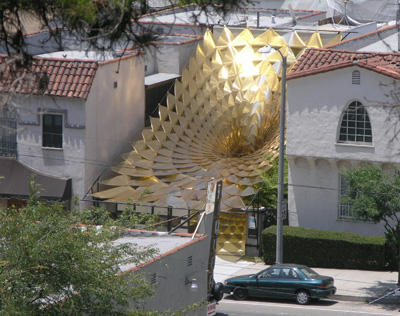 i dont know how they did it, but they made a giant gold vortex from an empty lot in a series of cheap bungalows near echo park, the bungalows usually hold digital artists.
while leonard cohen was a monk on mt baldy, his money managers apparently stole 9.85 million dollars, leaving him with nothing.
"No More Games. No More Bombs. No More Walking. No More Fun. No More Swimming. 67. That is 17 years past 50. 17 more than I needed or wanted. Boring. I am always bitchy. No Fun -- for anybody. 67. You are getting Greedy. Act your old age. Relax -- This won't hurt."
and Thompsons suicide note--its funny, he talked about the superbowl as so impt, as he couldnt kill himself in jan. b/c of the superbowl, and thinking of my bday on the 14th of that month.
hippie folk like glenys, really, in the sense that hope is to be found in simple localised pleasures, and its really really lofi, and its guitar in the bedroom shit, but listen and give it a go.
pauline kael marginalia, she tends to one word, or puncuation.
Captain America, the Avengers, Nick Fury, Black Panther, Ant-Man, Cloak & Dagger, Dr. Strange, Hawkeye, Power Pack and Shang-Chi--will be feautre films from marvel, i could post the story, but its a rewritten press release...the ones i want to see are antman and dr strange, but only if ant man is porn and if dr strange was done with muppet surrealism.
LA Governor goes buck on FEMA
EMS accounts from Katrina
and queer familes cannot get fema aid b/c of the defense of marriage act. (find the link in a second)
VINTAGE SUPERMARKET PHOTOS
 i dont know how they did it, but they made a giant gold vortex from an empty lot in a series of cheap bungalows near echo park, the bungalows usually hold digital artists.
 while leonard cohen was a monk on mt baldy, his money managers apparently stole 9.85 million dollars, leaving him with nothing.
"No More Games. No More Bombs. No More Walking. No More Fun. No More Swimming. 67. That is 17 years past 50. 17 more than I needed or wanted. Boring. I am always bitchy. No Fun -- for anybody. 67. You are getting Greedy. Act your old age. Relax -- This won't hurt."
and Thompsons suicide note--its funny, he talked about the superbowl as so impt, as he couldnt kill himself in jan. b/c of the superbowl, and thinking of my bday on the 14th of that month.

Tuesday, September 06, 2005
Jasper Johns
Reading Charlie Finch’s (of Coagula and Most Art Sucks fame) catty and bitchy review of the new Johns show caused me deep anger not only because it seemed to be homophobic, but also because it is so canonical and not very creative. Finch is usually our most iconoclastic, complicated and astute critic. But the critical consensus from the beginning of John’s career was the assumption that his discretion and dislike of interpretation could be viewed as being closeted and by extension all of John’s work was queer work, and that the work got worse because of his hermeticism.
John’s newest colleges, assemblages and paintings are the first work since the Target series of the early 60s that directly concerns issues of male bodies and the first ever that talks explicitly of those bodies working together queerly. Ironically, this matters less then the obvious care about formal concerns relating to his recent severe classicism. The austere reflections of bodies in desire make this so little about the things critics usually care about. Things like line placement, or history, or colour, or devotion to out of fashion artists. Devotion to the body as a thing rather then a theory, then.
Up to this series, if one only looked at the work on the walls, and did not read critical accounts or biographies, John’s queerness disguised well. Here in the new works called Catenary (which is the muscle that holds up either the penis or the labia and also a math term used to describe a chain hanging from two ends) Think of one end as literal and one as metaphorical. Think of one end as the muscles of the body and the other as abstracted geometries. Think of the chain that swings between them as Johns swinging beween form and metaphor. Between abstraction and reality. Between the body and the sky. The literal and the poetic extensions are never addressed in Finch, who thinks of them as just one thing.
Finch does not notice John’s classicism, the career history, the formalism of his colour choices, the dialogue with other writing. He assumes repeatedly that the strange, small grey works here, and the problematic sexual references are just about fucking. That the hermeticism of Johns work is not a virtue and that his work has declined with success, as opposed to being more strange, more exhaustive and more hauntingly, mournfully beautiful. It is the work of a man close to death who’s children were only ever his paintings.
To assume that every piece of art by queer artists is a reflection of sexuality is an explicit dismissal of other readings and other energies. The conservative critic Robert Hughes once wrote about Robert Rauschenberg’s 1959 combine. The combine features an Angora goat with a tire around its middle; Hughes clearly called it a symbol of sodomy. Rauschenberg responded, “It’s a miracle Hughes did not get run over more.”
We risk being run over, if we do not look at the art on the walls. Assuming that queer artists not only talk about being queer, but talk about other concerns, both formal and personal gives a larger respect to the pieces in question. Calling a work poor because it did not fulfill the desires of the critic in question is much more shallow then anything that Johns has placed in his new show.
Reading Charlie Finch’s (of Coagula and Most Art Sucks fame) catty and bitchy review of the new Johns show caused me deep anger not only because it seemed to be homophobic, but also because it is so canonical and not very creative. Finch is usually our most iconoclastic, complicated and astute critic. But the critical consensus from the beginning of John’s career was the assumption that his discretion and dislike of interpretation could be viewed as being closeted and by extension all of John’s work was queer work, and that the work got worse because of his hermeticism.
John’s newest colleges, assemblages and paintings are the first work since the Target series of the early 60s that directly concerns issues of male bodies and the first ever that talks explicitly of those bodies working together queerly. Ironically, this matters less then the obvious care about formal concerns relating to his recent severe classicism. The austere reflections of bodies in desire make this so little about the things critics usually care about. Things like line placement, or history, or colour, or devotion to out of fashion artists. Devotion to the body as a thing rather then a theory, then.
Up to this series, if one only looked at the work on the walls, and did not read critical accounts or biographies, John’s queerness disguised well. Here in the new works called Catenary (which is the muscle that holds up either the penis or the labia and also a math term used to describe a chain hanging from two ends) Think of one end as literal and one as metaphorical. Think of one end as the muscles of the body and the other as abstracted geometries. Think of the chain that swings between them as Johns swinging beween form and metaphor. Between abstraction and reality. Between the body and the sky. The literal and the poetic extensions are never addressed in Finch, who thinks of them as just one thing.
Finch does not notice John’s classicism, the career history, the formalism of his colour choices, the dialogue with other writing. He assumes repeatedly that the strange, small grey works here, and the problematic sexual references are just about fucking. That the hermeticism of Johns work is not a virtue and that his work has declined with success, as opposed to being more strange, more exhaustive and more hauntingly, mournfully beautiful. It is the work of a man close to death who’s children were only ever his paintings.
To assume that every piece of art by queer artists is a reflection of sexuality is an explicit dismissal of other readings and other energies. The conservative critic Robert Hughes once wrote about Robert Rauschenberg’s 1959 combine. The combine features an Angora goat with a tire around its middle; Hughes clearly called it a symbol of sodomy. Rauschenberg responded, “It’s a miracle Hughes did not get run over more.”
We risk being run over, if we do not look at the art on the walls. Assuming that queer artists not only talk about being queer, but talk about other concerns, both formal and personal gives a larger respect to the pieces in question. Calling a work poor because it did not fulfill the desires of the critic in question is much more shallow then anything that Johns has placed in his new show.
Monday, September 05, 2005
going through cancon lists, for career devolpment grants, worth between 2 and 20k, i am actually getting closer on three counts.
i need 10 poems in 5 years, and I have 2.
i need 10k words of prose in fee paying publications in 6 years, and I have 6k.
i need 3 professional juried showing of photography, and I have one.
Feasibly, if it works out, i could have any one of these in the bag by next year. n/f seems most likely.
other things.
reading the london review of books essay on dante in translation today, i encountered a really interesting discussion of the role of the bible, and this is most obvious but i have never really thot about it before. when the bible was tied to the liturgical calendar, it followed the agricultural season...so it was this cycle that never began and never ended, there was no linerality to it...unlike oral tradtions of lets say homer or the vikings, which did end. when it came on paper, it did not have to be tied to the liturgical calendar anymore, it started on page one and ended on page whatever, its presence as a physical object suprerseeded anything else. i wonder then, how that reading of the scripture connected to the rise of the novel...and this may be bullshit, thinking of written books at that time and place, the whole seasonal thing.
reading schileebeckx's book on the eucharist, a hard, taut, and subtle re-examanation of what exactly was said by thomas and by the council of trent, sometimes about transubstation, but mostly about the implications of committee, community, and creation of sacred texts, led me to 25 year old peice of writing about boff, kung, schileebeckx and others realtionships to the last pope, and i had a small unsettling--i continue to be isolated from the vatican and rome not for my queerness but for my following of this strange collection of priests that came in the 70s and 80s, this international radical reclaiming of christs love and justice, this infusing of theorys profund tender ambiguity into xian discourse--and how diverse this collection is--dutch (shileebeckx), swiss (kung), brazillian (boff), american (curran) and priests from belgium, bombay, ecuador, nigeria...jesuits, domincans, basillans. nuns, lay members, priests, cardinals. ethicists, theologians, politcal scientists, theorists, etc. b/w 1968 and 1978, dozens and dozens of books came from all corners, not only submitting other ways of thinking but examaning what that thinking meant. the best example i have come across is the book i am reading, 160 pages. 80 of it tightly argued lingustic history, adn 80 of what we are going to do about it. putting oneself into this half, is not done anymore in the church, requiring a deep, heremuntics of suspicion next to a hermentuics of the bible gets you kicked out of the new orthodoxy. (and when i have the book next to me/finished reading it) i will vehemently disagree with some of his conculsions, but for someone who really does not require orthodoxy... read the article.
(also have read sou's colelcted poems again, and i want her chapbook/the griffin prize anthology, which i was impressed with at the time, but havent remembered much more then bornsons yeowoman lyricism...oh and more excuses to read fanny howe, which everyone should have.) so techically 79, because i havent fully finished the euchurist book yet.
got into 401 richmond's foto show in toronto, so show up to that if yr reading this from the t. 7 of my polaroids.
Lee Wang is editorial assitant to SOMA, the edgy style bible from the american west coast, so he pitched my name in amongst the lions, to be on thier review list and i pitched photos to esporus, the avant journal from nyc--which was stupid b/c they usually ask and it had an artists project from Ruscha, so its out of my leauge.
essay on the queens is really cryptic, really confusing, really fucked up, ray said he would help me work on it tomorrow.
really really proud of my richard thompson review, a confusing and pretentious album but well worth considering. up next week.
the album led me to write this about guy fawkes, in relation to his song the boys on mutton hill (proves how much of a timid writer, i am.)
The Boys of Mutton Street, is resonant of all sorts of terrorism in
London. It has shades of Guy Fawkes, with the singsong nursery rhyme
rhythm connects with the boys at school, and boys at war. The chorus
runs "We're the boys of mutton street, Mutton street, Mutton street,
we give no ground" How close that is to Remember, Remember the Fifth
of November!
The trailer to V for Vendetta uses the same line in the same way, and
its chilling remembering how Alan Moore used the history of the
festivals against themselves. Thompson rewards this reading—"Now
Bonfire Night/It was a sight./The bonfire , how it blazed. It nearly
set the street alight/so they called the fire brigade. The fire
brigade got busy/but we cut the horses clean."
It seems cagey that he wiggles around where these boys are, where
mutton street is, how dangerous the horses were, and all of this is
made more difficult when 20 years ago Alan Moore made an explicit
reclaiming of the fables and myths that surrounded the boys who tried
to blow up the parliaments,
Thompson almost makes it a game. It is unfair, what I am going to say
next, and maybe it shouldn't be written at all, but reading Russell
Smith two weeks ago in Toronto's Globe and Mail asking what are the
English going to do, for Guy Fawkes, with the subway bombings, makes
me ask what did the English do with them when the IRA came a calling
? What are the (social/poltical/aesthetic/etc) implications when you
make a hero of the Boys of Mutton Street, of Guy Fawkes? 500 years
later, the question remains to be answered.
rheinquist is dead, and i hate the fucker, his casual racism, his fascism, his fundmental obsession with the text,but scary, brilliant, messy, evil scalia is next, the porcine king of no restraint, and well that scares me.
all the information of new orleans, the lack of care, the images, the failures of the state, the savagery, all of it reminds me of sunday school pictures of the apocolypse. feels like the end of the world, geniunely, but then i have to get the old religous training out of my head.
here are some links
five sets of photographs meetings, missle silos, factories, offices, montana starwars equipment and homeland secuirity. about power nominally, really a powerful statement on the human impact of large and small descion making--strangely witty adn worth seeing.
a graph of the infulences and effects of realist art from mannerism to american kitsch (ie who influences who from michaelangelo to norman rockwell) ignores the seismic innovation of the 20h century, which usually rejects this taxonomizing--but an interesting excercise (check it out Rachel)
English professor Frances Kaye said she was talking about the wonders of childbirth, but on Tommy Lee's reality show Tuesday night, it appeared she was discussing the wonders of Lee's private parts. Kaye has told the Lincoln Journal Star she is not amused. The University of Nebraska-Lincoln professor said she thinks producers of "Tommy Lee Goes to College" lied to her about how they would use footage shot last fall during her Native American literature class.Her anger stems from a scene in which her class is discussing Lee's autobiography. Kaye appears to tell the class that the book's opening--an imagined conversation between Lee and his penis--is a beautiful and enduring symbol. Kaye said she actually was talking about childbirth, another subject broached in Lee's book. Her comments were edited into the discussion about the first chapter, Kaye said. (Chi Tribune)
a typographic history of london
a list, personal and gutwrenching of what makes people poor in america--i hit 5 as a child, and most of them in either Edmonton or Toronto
http://www.wonkette.com/politics//nagins-nightmare-full-transcript-123683.php
http://transcripts.cnn.com/TRANSCRIPTS/0509/01/acd.01.html
two blistering transcripts from New Orleans, one from Anderson Cooper and one from the Mayor.
Derridan Wedding Vows
i need 10 poems in 5 years, and I have 2.
i need 10k words of prose in fee paying publications in 6 years, and I have 6k.
i need 3 professional juried showing of photography, and I have one.
Feasibly, if it works out, i could have any one of these in the bag by next year. n/f seems most likely.
other things.
reading the london review of books essay on dante in translation today, i encountered a really interesting discussion of the role of the bible, and this is most obvious but i have never really thot about it before. when the bible was tied to the liturgical calendar, it followed the agricultural season...so it was this cycle that never began and never ended, there was no linerality to it...unlike oral tradtions of lets say homer or the vikings, which did end. when it came on paper, it did not have to be tied to the liturgical calendar anymore, it started on page one and ended on page whatever, its presence as a physical object suprerseeded anything else. i wonder then, how that reading of the scripture connected to the rise of the novel...and this may be bullshit, thinking of written books at that time and place, the whole seasonal thing.
reading schileebeckx's book on the eucharist, a hard, taut, and subtle re-examanation of what exactly was said by thomas and by the council of trent, sometimes about transubstation, but mostly about the implications of committee, community, and creation of sacred texts, led me to 25 year old peice of writing about boff, kung, schileebeckx and others realtionships to the last pope, and i had a small unsettling--i continue to be isolated from the vatican and rome not for my queerness but for my following of this strange collection of priests that came in the 70s and 80s, this international radical reclaiming of christs love and justice, this infusing of theorys profund tender ambiguity into xian discourse--and how diverse this collection is--dutch (shileebeckx), swiss (kung), brazillian (boff), american (curran) and priests from belgium, bombay, ecuador, nigeria...jesuits, domincans, basillans. nuns, lay members, priests, cardinals. ethicists, theologians, politcal scientists, theorists, etc. b/w 1968 and 1978, dozens and dozens of books came from all corners, not only submitting other ways of thinking but examaning what that thinking meant. the best example i have come across is the book i am reading, 160 pages. 80 of it tightly argued lingustic history, adn 80 of what we are going to do about it. putting oneself into this half, is not done anymore in the church, requiring a deep, heremuntics of suspicion next to a hermentuics of the bible gets you kicked out of the new orthodoxy. (and when i have the book next to me/finished reading it) i will vehemently disagree with some of his conculsions, but for someone who really does not require orthodoxy... read the article.
(also have read sou's colelcted poems again, and i want her chapbook/the griffin prize anthology, which i was impressed with at the time, but havent remembered much more then bornsons yeowoman lyricism...oh and more excuses to read fanny howe, which everyone should have.) so techically 79, because i havent fully finished the euchurist book yet.
got into 401 richmond's foto show in toronto, so show up to that if yr reading this from the t. 7 of my polaroids.
Lee Wang is editorial assitant to SOMA, the edgy style bible from the american west coast, so he pitched my name in amongst the lions, to be on thier review list and i pitched photos to esporus, the avant journal from nyc--which was stupid b/c they usually ask and it had an artists project from Ruscha, so its out of my leauge.
essay on the queens is really cryptic, really confusing, really fucked up, ray said he would help me work on it tomorrow.
really really proud of my richard thompson review, a confusing and pretentious album but well worth considering. up next week.
the album led me to write this about guy fawkes, in relation to his song the boys on mutton hill (proves how much of a timid writer, i am.)
The Boys of Mutton Street, is resonant of all sorts of terrorism in
London. It has shades of Guy Fawkes, with the singsong nursery rhyme
rhythm connects with the boys at school, and boys at war. The chorus
runs "We're the boys of mutton street, Mutton street, Mutton street,
we give no ground" How close that is to Remember, Remember the Fifth
of November!
The trailer to V for Vendetta uses the same line in the same way, and
its chilling remembering how Alan Moore used the history of the
festivals against themselves. Thompson rewards this reading—"Now
Bonfire Night/It was a sight./The bonfire , how it blazed. It nearly
set the street alight/so they called the fire brigade. The fire
brigade got busy/but we cut the horses clean."
It seems cagey that he wiggles around where these boys are, where
mutton street is, how dangerous the horses were, and all of this is
made more difficult when 20 years ago Alan Moore made an explicit
reclaiming of the fables and myths that surrounded the boys who tried
to blow up the parliaments,
Thompson almost makes it a game. It is unfair, what I am going to say
next, and maybe it shouldn't be written at all, but reading Russell
Smith two weeks ago in Toronto's Globe and Mail asking what are the
English going to do, for Guy Fawkes, with the subway bombings, makes
me ask what did the English do with them when the IRA came a calling
? What are the (social/poltical/aesthetic/etc) implications when you
make a hero of the Boys of Mutton Street, of Guy Fawkes? 500 years
later, the question remains to be answered.
rheinquist is dead, and i hate the fucker, his casual racism, his fascism, his fundmental obsession with the text,but scary, brilliant, messy, evil scalia is next, the porcine king of no restraint, and well that scares me.
all the information of new orleans, the lack of care, the images, the failures of the state, the savagery, all of it reminds me of sunday school pictures of the apocolypse. feels like the end of the world, geniunely, but then i have to get the old religous training out of my head.
here are some links
five sets of photographs meetings, missle silos, factories, offices, montana starwars equipment and homeland secuirity. about power nominally, really a powerful statement on the human impact of large and small descion making--strangely witty adn worth seeing.
a graph of the infulences and effects of realist art from mannerism to american kitsch (ie who influences who from michaelangelo to norman rockwell) ignores the seismic innovation of the 20h century, which usually rejects this taxonomizing--but an interesting excercise (check it out Rachel)
English professor Frances Kaye said she was talking about the wonders of childbirth, but on Tommy Lee's reality show Tuesday night, it appeared she was discussing the wonders of Lee's private parts. Kaye has told the Lincoln Journal Star she is not amused. The University of Nebraska-Lincoln professor said she thinks producers of "Tommy Lee Goes to College" lied to her about how they would use footage shot last fall during her Native American literature class.Her anger stems from a scene in which her class is discussing Lee's autobiography. Kaye appears to tell the class that the book's opening--an imagined conversation between Lee and his penis--is a beautiful and enduring symbol. Kaye said she actually was talking about childbirth, another subject broached in Lee's book. Her comments were edited into the discussion about the first chapter, Kaye said. (Chi Tribune)
a typographic history of london
a list, personal and gutwrenching of what makes people poor in america--i hit 5 as a child, and most of them in either Edmonton or Toronto
http://www.wonkette.com/politics//nagins-nightmare-full-transcript-123683.php
http://transcripts.cnn.com/TRANSCRIPTS/0509/01/acd.01.html
two blistering transcripts from New Orleans, one from Anderson Cooper and one from the Mayor.
Derridan Wedding Vows
Artist Statement For 401 Richmond
I like taking Polaroids. I like how they saturate colour, so
everything becomes so bright, strange, and pure—the grass greens, the
sky blues, the red of billboards, the yellow o jonquils. It is like a
strange world where everything is submerged in a super perfect world
of ideal colour, it almost hurts ones eyes, all subtlety is lost, but
when you go around and hope for subtlety, you miss things. It forces
ones eyes back to things ignored, it almost makes a platonic ideal of
it.
I like taking Polaroids because they can form something quotidian.
Other people have done this, the filmmaker John Waters and the
photographer Ryan McGinley both take a Polaroid of anyone who walks
into their residences. I do not doing anything so conceptual—but by
carrying a camera around, one records the basic ebb and flow of every
day life. Everything that one encounters become an aesthetic concern.
One can do this in other ways, mostly through digital cameras and
camera phones. Everyone is making daily encounters an aesthetic
concern, with the popularization of flickr accounts, the ease of
exchanging digital images, etc. Why do this one kind of camera in one
kind of way, is a love of film somewhat reactionary? There is
something to the craft, and the richness of 35 mm film, and so that
will last longer then anything else, but there is no craft or skill in
Polaroids. It is just point and click, even then, you cannot play with
lenses, or figure out what the best way of lighting is—thee is
something to that though. Taking a tool to specially limit you,
figuring out how to take the best images through limited means
sharpens a critical eye. Knowing how to photograph with a camera that
can only take from three feet away, in limited light, under certain
circumstances, and that you cannot Photoshop the images afterwards,
gives a sot of Zen feeling, waiting for the weather to change or
wandering looking for the right places, instead of planning it.
Patience is rewarded.
Often the object itself rewards the patience. It is strange to think
of something so immediate (30 seconds or less) would make people
patient. There is something to the cult of object. Something tenuous
and almost erotic in the unveiling of the image (Poloraids are often
used as porn because they are discreet objects created almost ex
nihllo, but that waiting for the image, the dropping of blackness and
the emerging of light, and having a small square to carry around in
your pocket, of place and time, and 25 years later having the image
drop off again. The Polaroid forever maintains its cult of
objecthood, in its own qualities, with out the intercession of
technological intervention, or digital tasks. The photos of landscape
then, sent back to Ontario from Alberta, are tactile and visceral
reminders of landscape. Think of them as extensions of the diptychs
travelers carried, of home saints or small landscapes, throughout
European history, or the aesthetics of mogul mintutures in India, or
figures of Shinto saints that kept obis connected for Japanese
Samurais. However, think of those things made by a small machine that
perpetuates images with minor human interventions.
I like taking Polaroids. I like how they saturate colour, so
everything becomes so bright, strange, and pure—the grass greens, the
sky blues, the red of billboards, the yellow o jonquils. It is like a
strange world where everything is submerged in a super perfect world
of ideal colour, it almost hurts ones eyes, all subtlety is lost, but
when you go around and hope for subtlety, you miss things. It forces
ones eyes back to things ignored, it almost makes a platonic ideal of
it.
I like taking Polaroids because they can form something quotidian.
Other people have done this, the filmmaker John Waters and the
photographer Ryan McGinley both take a Polaroid of anyone who walks
into their residences. I do not doing anything so conceptual—but by
carrying a camera around, one records the basic ebb and flow of every
day life. Everything that one encounters become an aesthetic concern.
One can do this in other ways, mostly through digital cameras and
camera phones. Everyone is making daily encounters an aesthetic
concern, with the popularization of flickr accounts, the ease of
exchanging digital images, etc. Why do this one kind of camera in one
kind of way, is a love of film somewhat reactionary? There is
something to the craft, and the richness of 35 mm film, and so that
will last longer then anything else, but there is no craft or skill in
Polaroids. It is just point and click, even then, you cannot play with
lenses, or figure out what the best way of lighting is—thee is
something to that though. Taking a tool to specially limit you,
figuring out how to take the best images through limited means
sharpens a critical eye. Knowing how to photograph with a camera that
can only take from three feet away, in limited light, under certain
circumstances, and that you cannot Photoshop the images afterwards,
gives a sot of Zen feeling, waiting for the weather to change or
wandering looking for the right places, instead of planning it.
Patience is rewarded.
Often the object itself rewards the patience. It is strange to think
of something so immediate (30 seconds or less) would make people
patient. There is something to the cult of object. Something tenuous
and almost erotic in the unveiling of the image (Poloraids are often
used as porn because they are discreet objects created almost ex
nihllo, but that waiting for the image, the dropping of blackness and
the emerging of light, and having a small square to carry around in
your pocket, of place and time, and 25 years later having the image
drop off again. The Polaroid forever maintains its cult of
objecthood, in its own qualities, with out the intercession of
technological intervention, or digital tasks. The photos of landscape
then, sent back to Ontario from Alberta, are tactile and visceral
reminders of landscape. Think of them as extensions of the diptychs
travelers carried, of home saints or small landscapes, throughout
European history, or the aesthetics of mogul mintutures in India, or
figures of Shinto saints that kept obis connected for Japanese
Samurais. However, think of those things made by a small machine that
perpetuates images with minor human interventions.
Sunday, September 04, 2005
Thursday, September 01, 2005

Subscribe to:
Posts (Atom)

